

✍️ Vom Rey Hotel Hanoi Team — lokale Reiseführer im Rey Hotel Hanoi, 14 Ly Nam De, Hoan Kiem District, Hanoi · 🗓️ Zuletzt aktualisiert: November 2026 · ⏱️ ~12 Min. Lesezeit
Fragen Sie irgendjemanden in unserem Team, was Hanoi besonders macht, und Sie werden selten zuerst eine Liste von Denkmälern hören. Sie werden von der Frau hören, die um 5:40 Uhr morgens Brühe verkauft, von der Art und Weise, wie die ganze Stadt nach dem Abendessen um den Hoan-Kiem-See spaziert, und von jenem Moment, in dem ein Zug so nah an Ihnen vorbeifährt, dass Sie ihn auf einer Straße, die genau dafür berühmt ist, berühren könnten. Hanoi ist keine Stadt, die man abhakt — es ist eine Stadt, in die man sich einlebt. Und unsere Aufgabe, von unserer Rezeption an der Rey Hotel Hanoi in der Ly Nam De Straße, ist es, Ihnen zu helfen, sich schnell einzuleben.
Wir haben diesen Leitfaden so geschrieben, wie wir Fragen am Concierge-Schalter beantworten: mit echten Preisen (geprüft Stand Ende 2026), ehrlichen Zeitempfehlungen und den kleinen Details, die nur Menschen kennen, die hier leben. Jeder Vorschlag unten ist zu Fuß von unserer Tür aus oder im Rahmen eines Tagesausflugs erreichbar, denn so erkunden wir die Stadt selbst.
Ein Tipp vor der Liste: Hanoi belohnt Rhythmus. Die Morgen gehören dem See, den Märkten und den Parks, bevor die Hitze und die Motorräder zunehmen; die Nachmittage sind für Museen, Tempel und Kaffee; und die Stadt schaltet erst nach Sonnenuntergang wirklich ein. Planen Sie um diesen Rhythmus herum, und alles Folgende wird einfacher. Unsicher, wann Sie kommen sollen? Unser monatlicher Wetterleitfaden hilft Ihnen weiter.
🏮 Die 15 besten Aktivitäten in Hanoi
1. Den Hoan-Kiem-See im Morgengrauen umrunden
Zwischen 5:30 und 7:00 Uhr morgens gehört die drei Kilometer lange Schleife um den Hoan-Kiem-See Hanoi selbst: Tai-Chi-Gruppen unter den Banyanbäumen, Paare, die Badminton an Laternenpfählen spielen, und Verkäufer, die Läufern Klebreis verkaufen. Es ist kostenlos, es ist flach, und es ist die single beste Einführung in die Stadt. Überqueren Sie die rot gestrichene Huc-Brücke zum Ngoc-Son-Tempel (etwa 50.000 VND, Kinder unter 15 Jahren frei) und suchen Sie das riesige Schildkröten-Stofftier im Glaskasten — eine Anspielung auf die Legende des Sees aus dem 15. Jahrhundert von der zurückgegebenen Klinge an die Goldene Schildkröte. Unser vollständiger Hoan-Kiem-See-Leitfaden kartiert die gesamte Schleife, und vom Rey Hotel ist das Wasser ein 7-minütiger Spaziergang.
2. Verirren Sie sich in den 36 Straßen des Altviertels
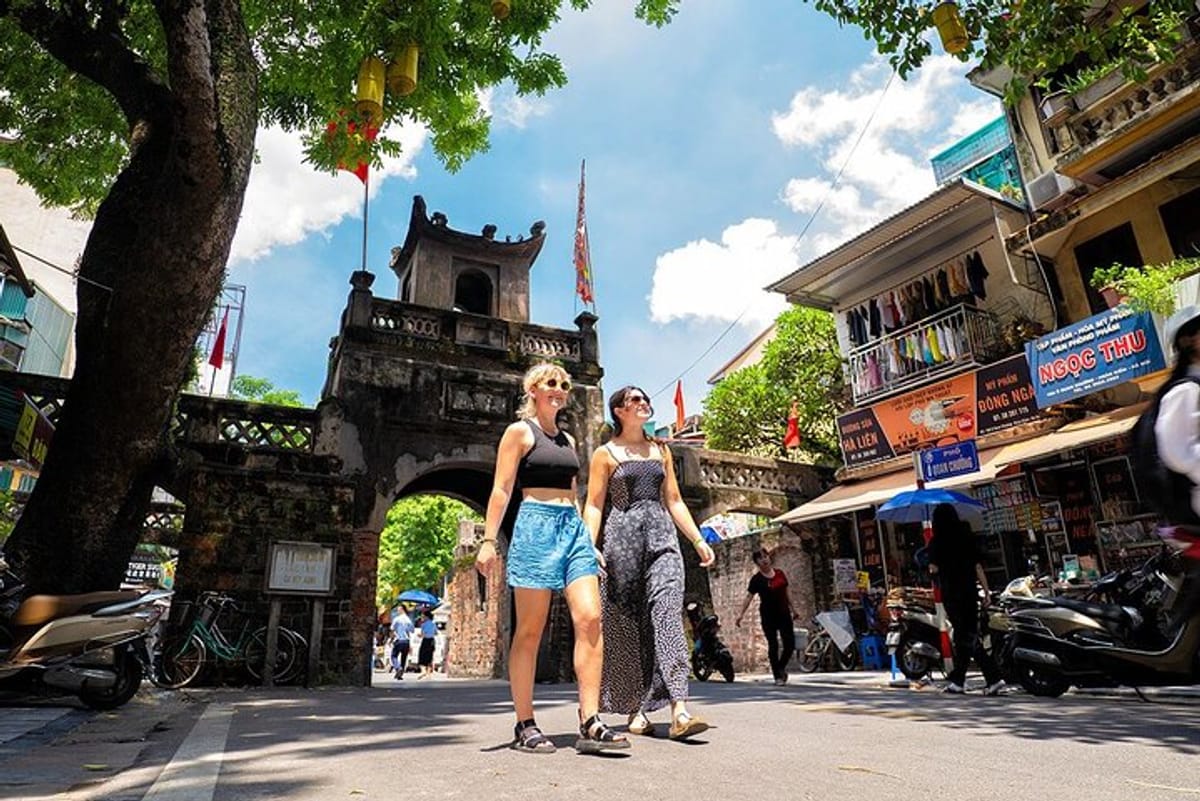
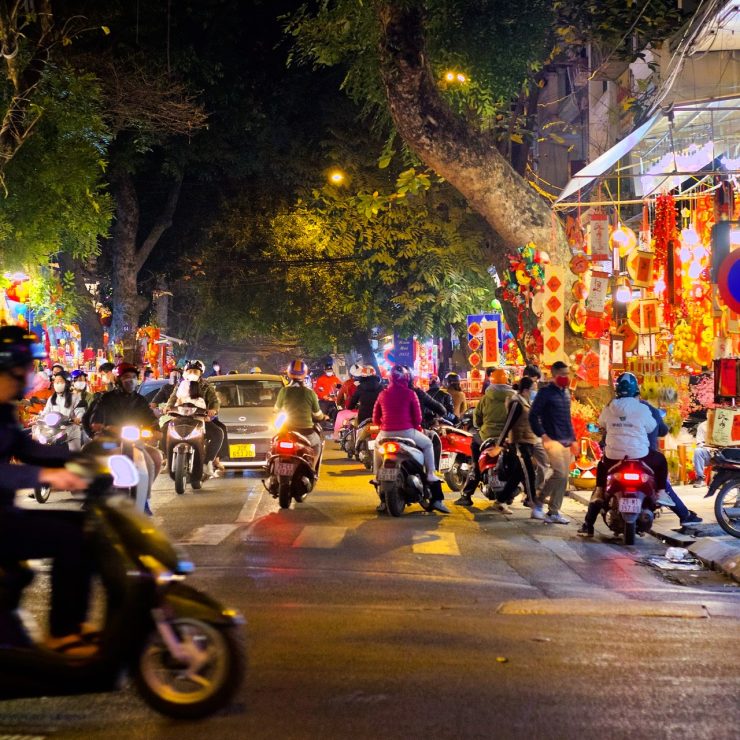
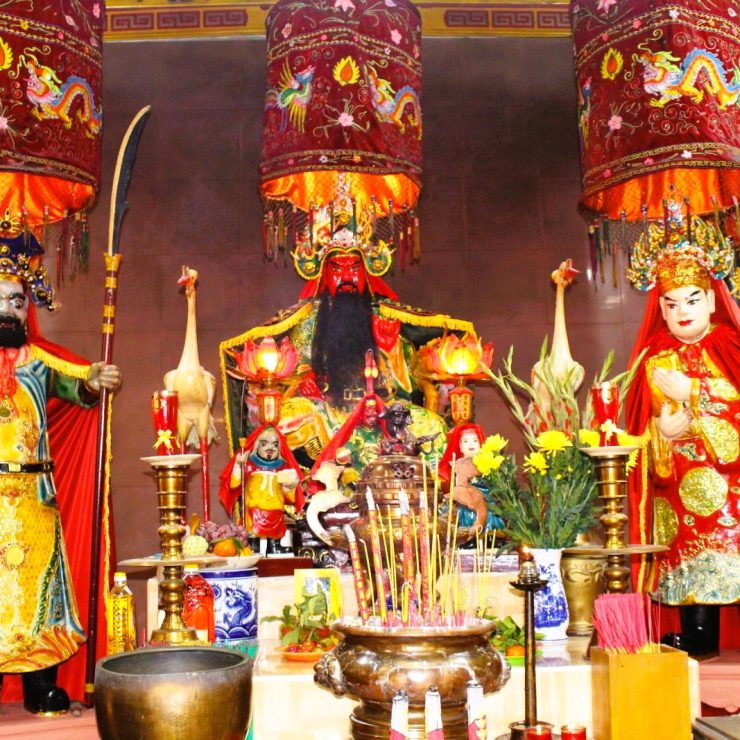
Das Altviertel ist kostenlos zu erkunden — kein Ticket, kein Tor — und es ist so organisiert, wie es seit Jahrhunderten war, nach Zünften: Hang Ma verkauft festliche Dekorationen, Hang Bac Schmuck, Lan Ong Kräutermedizin, Hang Dao Seide und Schuhe. Beginnen Sie am Alten Stadttor (Quan Chuong), einem der letzten erhaltenen Tore der Zitadellenmauer, und lassen Sie dann eine Straße Sie in die nächste ziehen. In den nördlichen Gassen, fünf Minuten von unserer Tür entfernt, finden Sie den Quan-De-Tempel und den alten Brunnen an der Hang Dao, an dem die meisten Touristen einfach vorbeigehen — unser verborgene Schätze innerhalb von 5 Minuten vom Rey Hotel listet sie alle auf.
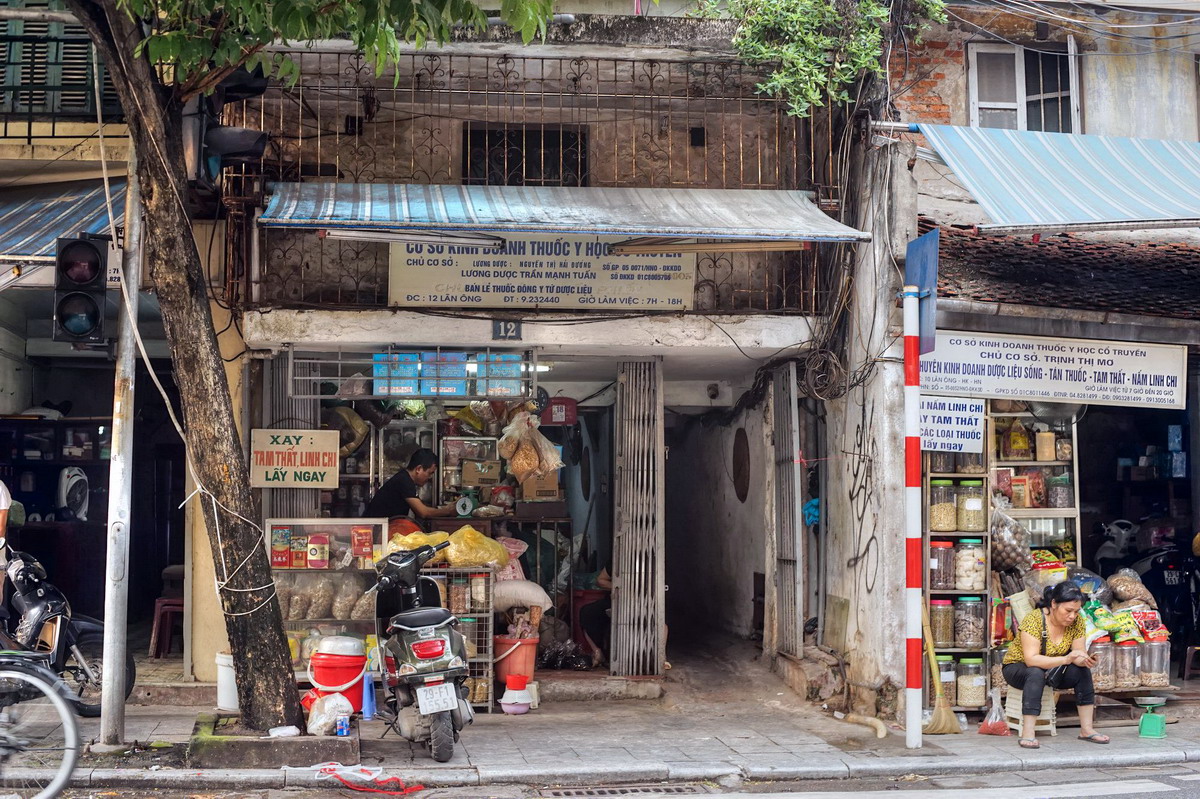
3. Essen Sie sich durch den Street-Food-Kanon
Pho zum Frühstück, Bun Cha zum Mittagessen, Banh Mi wann immer der Wagen beschäftigt aussieht: Hanois Street Food ist der beste Grund zu kommen, und die meisten Gerichte kosten zwischen 25.000 und 70.000 VND. Die Klassiker, die Sie suchen sollten: Pho Bo mit handgeschnittenen Reisnudeln, Bun Cha (gegrilltes Schweinefleisch mit Nudeln — das Gericht, das Anthony Bourdain und Präsident Obama berühmt machten), Banh Cuon, Cha Ca mit Kurkuma-Fisch und Banh Mi gefüllt mit Pastete und eingelegtem Gemüse. Folgen Sie den Plastikhockern: Ein belebter Stand mit hohem Umschlag ist fast immer ein sicherer Stand. Unser Street-Food-Leitfaden deckt 12 Gerichte ab, die Sie probieren müssen, und wo Sie sie finden, und für ein beruhigendes Gefühl bei der Hygiene lesen Sie unsere Tipps für sicheres Street Food , bevor Sie eintauchen.

4. Trinken Sie Eierkaffee dort, wo er erfunden wurde
Im Jahr 1946 verquirlte ein Metropole-Barkeeper namens Nguyen Van Giang Eigelb mit Kondensmilch und Robustkaffee, weil frische Milch knapp war — und erfand versehentlich Hanois Signature-Getränk. Seine Familie serviert ihn noch immer im Cafe Giang in der 39 Nguyen Huu Huan, zehn Minuten von unserer Tür entfernt, für etwa 35.000–40.000 VND pro Tasse: oben pudding-süß, darunter bitter, serviert in einer Schüssel mit heißem Wasser, um ihn warm zu halten. Bestellen Sie ihn beim ersten Mal heiß und probieren Sie dann die Kakao- oder Matcha-Versionen. Unser Eierkaffee-Leitfaden erklärt die Geschichte und listet die besten Cafés auf, einschließlich MOJO Cafe & Bistro direkt in unserer Lobby.
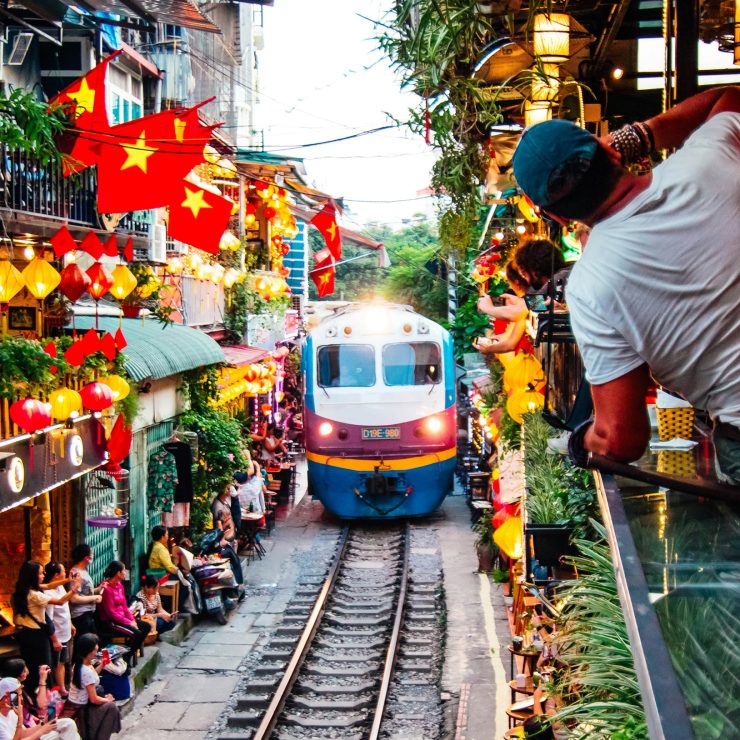
5. Beobachten Sie, wie sich der Zug durch die Train Street zwängt
Kham Thiens berühmter Eisenbahnkorridor — wo ein fahrender Zug innerhalb eines Meters an Wohnzimmertüren vorbeifährt — ist Hanois meistfotografierte halbe Stunde. Die Regeln wurden in den letzten Jahren verschärft: Man darf nur in den Cafés entlang der Gleise sitzen, niemals auf den Schienen stehen. Züge rollen typischerweise am Nachmittag (gegen 15:00–16:30 Uhr) und in Abendzeiten zwischen 19:00 und 22:00 Uhr durch, but the timetable changes daily, so confirm with your café and arrive 30–45 minutes early for a front-row table. Our Train Street guide has the 2026 rules, entrances and etiquette.

6. Pay your respects at the Ho Chi Minh Mausoleum complex
Ba Dinh is where modern Vietnam is staged, and it is free. The Ho Chi Minh Mausoleum opens mornings only (7:30–10:30 April–October, 7:30–11:00 November–March) and closes every Monday and Friday; it also shuts for annual maintenance around early September to early November — it reopens on 3 November 2026. Dress with shoulders and knees covered and leave bags behind. Afterwards walk the Presidential Palace grounds, Uncle Ho’s modest Stilt House and the lotus-shaped One Pillar Pagoda. The Imperial Citadel of Thang Long, a UNESCO site, sits directly behind (about 70,000 VND). Timing and etiquette details are in our Ba Dinh complex guide.
7. Stand in the courtyards of the Temple of Literature
Founded in 1070, Vietnam’s first university is a sequence of five walled courtyards — lotus ponds, stone turtle steles bearing the names of doctorate graduates going back to the 15th century, and the multi-tiered Khue Van Cac pavilion that appears on the 100,000 VND note. Entry is 70,000 VND (etwa 35,000 for students, under-15s free), open roughly 8:00–17:00. Go on a weekday morning when local students in traditional ao dai come for graduation photos. If your dates line up, the evening 3D-mapping show (“Temple of Literature by Night”, 199,000 VND, 18:30–22:00) is a beautiful after-dark alternative.
8. Climb the Flag Tower at the Imperial Citadel
Technically part of the same Ba Dinh morning as number six, but the citadel deserves its own hour: 1,000 years of royal Vietnam layered in one site, from the 11th-century dynasties to the 20th-century command bunkers with maps still on the walls. Climb the red Flag Tower for the best free-ish view in the city (the citadel ticket is about 70,000 VND), and don’t skip the archaeology basement where excavated foundations sit under glass walkways. The site is remarkably quiet compared with the Old Quarter — you will hear birdsong — and the lighting is beautiful in the late afternoon. Combine it with the Mausoleum next door and you have Hanoi’s whole political history in one morning’s walk.
9. Walk the corridors of Hoa Lo Prison
The French built Hoa Lo in 1896 to hold Vietnamese independence fighters; two generations later it held American POWs who sarcastically nicknamed it the “Hanoi Hilton”. The museum tells both stories — the guillotine room is sobering, the escape-tunnel exhibit gripping. Entry is 50.000 VND, with a well-produced audio guide for a little extra, and it is a 15-minute taxi or a 30-minute walk from the Old Quarter. Go early or late: the corridors get crowded midday. This is the one Hanoi museum that lingers with most of our guests long after the trip.
10. Watch a water puppet show at twilight
Water puppetry began in the flooded rice paddies of the Red River Delta a thousand years ago, and the Thang Long Water Puppet Theatre on Dinh Tien Hoang keeps the tradition alive with a live orchestra of bamboo flutes, drums and the glorious single-string dan bau. Yes, it is touristy; yes, it is still wonderful — the puppeteers stand waist-deep behind a bamboo screen the whole show. Tickets run 100,000–200,000 VND depending on seats, shows last about 50 minutes and run daily, several per evening. Book ahead in high season; the theatre sits right on the lake, so pair it with dinner nearby.
11. Shop the Weekend Night Market on Hang Dao
Every Friday, Saturday and Sunday from about 18:00 to midnight, the city closes Hang Dao, Hang Ngang and Hang Duong to traffic and strings them with lights from the lake all the way to Dong Xuan Market — a kilometre of snacks, souvenirs, balloon toys and locals doing their evening promenade. Prices are negotiable; go at 18:30 when it opens, not 20:30 when it is shoulder-to-shoulder. The market literally ends at the doorstep of our neighbourhood — five minutes from the hotel — which makes an easy after-dinner loop. Our night-time guide covers the market plus the rest of Hanoi after dark.
12. Toast the evening with bia hoi on Ta Hien
“Bia hoi” is fresh, unpasteurised draught beer brewed daily and sold from steel taps on the pavement for 10,000–15,000 VND a glass — about forty cents — at roughly 3% strength. The epicentre is Ta Hien street near the lake, where low stools spill across the road every evening and strangers clink glasses over plates of fried fermented pork and roasted peanuts. It is less a bar scene than a street party that happens every night. Bring small notes, pace yourself, and remember the last glasses go down best when the ice has melted — locals say bia hoi is made to be drunk quickly.
13. Haggle your way through Dong Xuan Market
Set up in 1889, Dong Xuan is Hanoi’s largest covered market: three floors of fabric, shoes, tea, dried goods and kitchenware beneath a Soviet-style concrete roof. It is open daily from about 6:00 to 18:00 — and it is the northern anchor of the weekend night market. Bargaining is expected and cheerful; start at about 60% and settle in the middle with a smile. Even if you buy nothing, the food court in the basement alley serves excellent bun oc (snail noodles) and banh cuon. From Rey Hotel it is a flat five-minute walk — our guests pop in between breakfast and the lake. Go early on a weekday if you want to see the market doing its real work: wholesale traders loading silk and dried squid before the tourists wake up, which is the most photogenic hour the building has.
14. Take a day trip to Ninh Binh’s karst rivers
Two hours south of Hanoi, the limestone towers of Ninh Binh rise straight out of rice paddies — it is called “Ha Long Bay on land” for good reason. Row a sampan through cave tunnels at Tam Coc (250,000 VND) or the grander Trang An (300,000 VND), climb the 500 steps of Mua Cave (100,000–150,000 VND) for the classic panorama, and visit the 10th-century capital at Hoa Lu. Organised day tours run from about US$25–40 including transfers; going independent by train or limousine van is easy too. Our Ninh Binh day-trip guide compares all the options, and the hotel can arrange a driver the night before.

15. Do one Hanoi evening properly slowly
Our most repeated piece of advice: schedule one evening for nothing. Start with coffee at MOJO Cafe & Bistro in our lobby, walk seven minutes to the lake to watch the lights come on around Turtle Tower, eat pho or bun cha at a stall you like the look of, then finish with a nightcap — a cocktail at MOJO or a quiet beer in our garden courtyard. Hanoi’s magic is cumulative, not scheduled, and the travellers who love this city most are the ones who give it one unhurried night. If you are choosing where to base yourself for exactly that, our complete guide to Rey Hotel Hanoi starts with the rooms and ends with the rooftop views.

💰 Hanoi Entrance Fees at a Glance (2026)
| Attraction | Adult ticket | Notes |
|---|---|---|
| Hoan Kiem Lake loop | Free | Ngoc Son Temple about 50,000 VND |
| Old Quarter streets | Free | No ticket needed |
| Tempel der Literatur | 70,000 VND | ~35,000 students; night show 199,000 VND |
| Imperial Citadel of Thang Long | ~70,000 VND | UNESCO site behind the Mausoleum |
| Hoa Lo Prison | 50.000 VND | Audio guide extra |
| Ho Chi Minh Mausoleum | Free | Mornings only; closed Mon & Fri |
| Thang Long Water Puppets | 100,000–200,000 VND | About 50 minutes, daily shows |
| Tam Coc boat (Ninh Binh) | 250,000 VND | Day trip about 2 hours each way |
💡 Local tip: change money at an authorised exchange counter or withdraw from a bank ATM (Vietcombank, BIDV) — 500,000 VND notes look new and shiny but no street vendor can give change for one. Ask our front desk to break large notes any time.
⚠️ Safety note: crossing Hanoi traffic is a walking meditation — move slowly, steadily and predictably and the motorbikes flow around you. Never sprint. At Train Street, stay in the cafés: standing on the tracks is prohibited and genuinely dangerous.
❓ Frequently Asked Questions
Wie viele Tage benötigen Sie in Hanoi?
Drei Tage sind der ideale Zeitrahmen: ein Tag für das Altviertel und den Hoan-Kiem-See zu Fuß, ein Tag für den Ba-Dinh-Komplex und die Museen und ein flexibler Tag für die Train Street, Kaffee und Shopping — oder einen Tagesausflug nach Ninh Binh. Reisende mit fünf Tagen fügen in der Regel Ninh Binh plus einen weiteren entspannten Tag auf dem Wochenendmarkt hinzu, was genau dem Tempo entspricht, in dem die Einheimischen leben.
Is Hanoi’s Old Quarter walkable from Rey Hotel?
Completely. Rey Hotel Hanoi sits at 14 Ly Nam De, on the northern edge of the Old Quarter itself: Dong Xuan Market is about a 5-minute walk, Hoan Kiem Lake 7 minutes, St. Joseph’s Cathedral 10 minutes, and the Old City Gate even closer. Nearly everything in this guide needs no transport at all, and our Guide für Hanoi zu Fuß lists the routes.
Was ist der beste Monat, um Hanoi zu besuchen?
October and November are the classic picks — cool, dry, golden light — with March and April a close second before the summer heat. December to February is atmospheric but chilly, and June to September is hot with heavy afternoon showers. Our month-by-month guide breaks down temperatures, festivals and prices for every month.
Ist die Train Street im Jahr 2026 für Touristen geöffnet?
Yes, but only from the cafés along the tracks — standing or walking on the rails is prohibited, and police periodically enforce it. Buy a drink, take a seat, and watch the scheduled passings (typically mid-afternoon and evening). Rules and timings change, so read our current Train Street guide before you go.
Wie viel Geld brauche ich pro Tag in Hanoi?
Budget travellers eat phenomenally on 500,000–700,000 VND (about US$20–28) a day excluding accommodation; mid-range travellers usually spend around 1,000,000–1,500,000 VND (US$40–60) with tours, taxis and dinners. Entrance fees in this guide total under US$30 even if you do everything — Hanoi remains one of the best-value capitals in Asia.

 English
 Korean
 Chinese (China)
 Japanese
 Vietnamese
 French
 German
 Spanish
 Italian
 Russian
 Chinese (Taiwan)
 Chinese (Hong Kong)
 Thai
 Arabic