

✍️ Por el equipo del Rey Hotel Hanoi — local guides at Rey Hotel Hanoi, 14 Ly Nam De, Hoan Kiem District, Hanoi · 🗓️ Last updated: November 2026 · ⏱️ ~13 min read
There is a hand-drawn map taped to our front desk at Hotel Rey Hanoi — annotated by the whole team with the stalls we actually eat at on our days off: the pho counter our night manager queues at before sunrise, the bun cha place our gardener swears by, the snail-noodle alley we escape to on quiet evenings. Guests who ask “where do you really eat?” get that map. This guide is its written version.
Geography helps: Rey Hotel sits at 14 Ly Nam De on the northern edge of the Old Quarter, so the food starts at our doorstep — Dong Xuan Market five minutes away, the lake seven, famous lanes in between. Most dishes below cost 25,000–70,000 VND (about US$1–3), checked as of late 2026, and every one is a team favourite.
One habit before you start: follow the plastic stools — Hanoi votes with its feet three times a day, and a busy stall is almost always good. For the city around the food, our guide to the best things to do in Hanoi covers the rest.
🍜 The 12 Dishes: Hanoi’s Street Food Canon
1. Phở bò
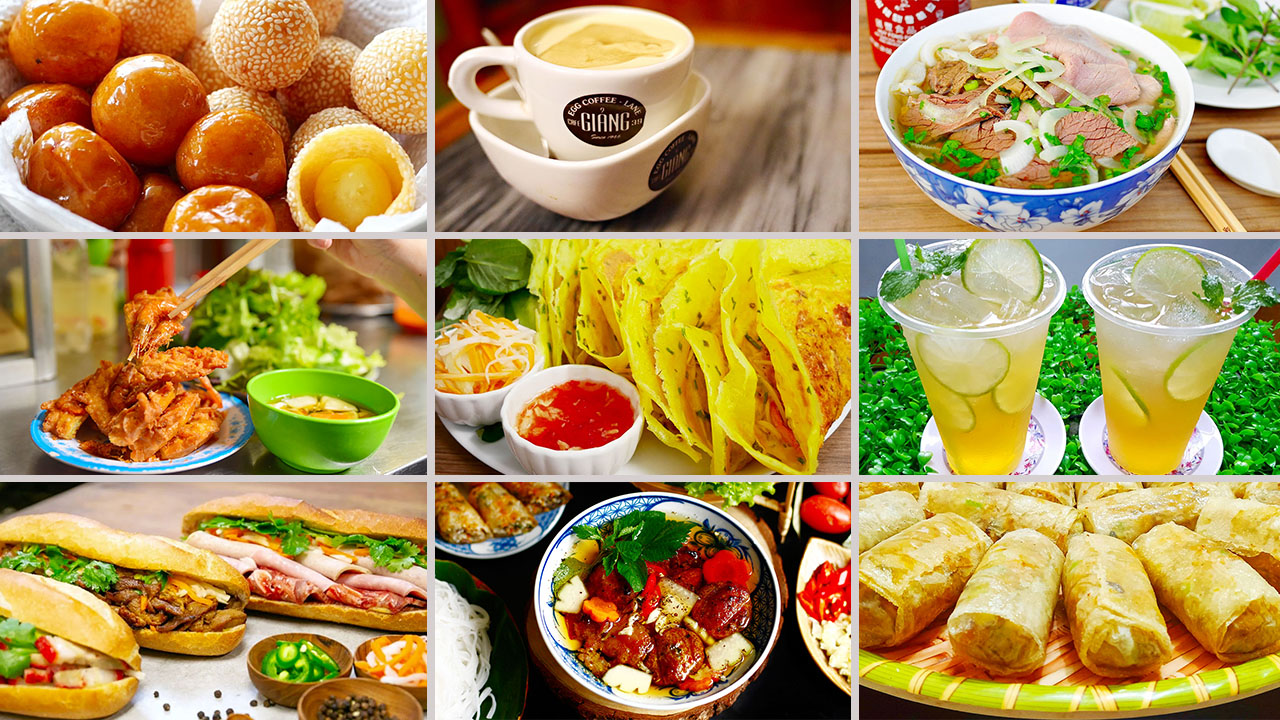
Pho is Hanoi’s breakfast, and the Hanoi version is a purist one: clear beef broth simmered for hours with star anise, ginger and charred onion, poured over flat rice noodles and thinly sliced beef, finished with spring onion. No towering herb plate, no hoisin on the table — the broth does the talking. We send guests to the busy counters around Ly Quoc Su street by the cathedral, about 10 minutes from the hotel, or the morning queues near Dong Xuan Market. A bowl runs about 40,000–60,000 VND. Eat it the local way: hot and fast, with quay — fried dough sticks — for dunking and a splash of chili vinegar. It is the dish we tell every guest to eat on day one.
2. Bún chả
Bun cha is Hanoi’s signature lunch: charcoal-grilled pork — patties and belly — dropped into a bowl of warm, sweet-sour fish sauce, served with a basket of white rice vermicelli and a small mountain of fresh herbs. You dunk the noodles in the broth bite by bite, and somehow the table empties. The dish went global in May 2016, when Barack Obama and Anthony Bourdain ate bun cha together in Hanoi on low stools with cold beer — exactly the way locals do. Lunchtime stalls around Hang Manh and the lanes west of the lake are the classic addresses, and many sell out by mid-afternoon. A generous set costs about 40,000–60,000 VND; order at midday, when the charcoal is hottest.
3. Bánh cuốn
Banh cuon is breakfast theatre. The cook pours rice batter over a stretched muslin cloth above steaming water; seconds later a lid comes off and a paper-thin sheet is rolled around minced pork and wood-ear mushroom, showered with crisp fried shallots and served with cinnamon-pork sausage, cucumber and a light dipping sauce. It is delicate, nearly weightless food — the opposite of the fried snacks — and watching the maker’s hands is half the pleasure. Stalls around Dong Xuan Market and its food alley steam them to order all morning, a flat 5-minute walk from our door. A plate costs about 35,000–50,000 VND. Go before 10:00, when the batter is freshest and the stools are full of commuters who know it.
4. Chả cá
Cha ca is the dish that named a street. On Cha Ca Street in the Old Quarter, families have served turmeric-stained fish with mounds of fresh dill for generations, and the ritual is half the meal: a charcoal-hot pan of fish arrives at your table and keeps cooking while you fold in rice noodles, roasted peanuts, herbs and a dash of shrimp paste. It is aromatic, a little theatrical, and one of the pricier bites in this guide — count on 70,000 VND and up per person, a splurge by street-food standards. We recommend it for the second or third evening, when you have earned the sit-down version of street food and a pan sizzling in front of you while the Old Quarter hums outside.
5. Bánh mì
Banh mi is the street food you can hold in one hand. Hanoi’s version runs lighter than the south’s: a crackly baguette slicked with pate, layered with cold cuts or grilled meat, pickled carrot and daikon, cucumber, chili and coriander — more bread-forward, less sauce-drowned. It is breakfast for people in a hurry, and the cheapest entry point to the cuisine at about 25,000–40,000 VND. Carts cluster around market entrances and school gates all over the Old Quarter, and the rule stands everywhere: buy where the bread is going fast. Ask our front desk for the current favourite within two minutes of the hotel, then eat it standing on the kerb like everyone else — the first bite is always the best one.
6. Bún bò Nam Bộ
Bun bo Nam Bo is the dish we recommend to guests who claim they don’t like fish sauce. It is a dry noodle bowl — no broth at all — layered with vermicelli, lemongrass-marinated stir-fried beef, fried shallots, roasted peanuts, crisp lettuce and fistfuls of fresh herbs, with nuoc cham poured over at the table. Every bite hits sweet, sour, salty, nutty and hot at once, and it eats like a salad that decided to become dinner. Lunch counters around the Old Quarter serve it all day; a loaded bowl is about 40,000–60,000 VND. Mix it properly — most of the flavour hides at the bottom — and order a fresh lime juice alongside. It is our default first lunch after an early flight.
7. Nem rán
Nem ran — fried spring rolls, called cha gio in the south — are the shared plate that starts every proper Hanoi table. Minced pork, glass noodles, wood-ear mushroom and carrot are rolled in thin rice-paper sheets and fried until the wrapper blisters and crackles. You wrap each roll in lettuce and herbs, dunk it in fish sauce, and try to pace yourself. They appear everywhere: family kitchens, bia hoi tables on Ta Hien, night-market grills. A plate of four to six rolls runs about 30,000–50,000 VND. The quick test of a good kitchen is the wrapper — thin enough to shatter, never thick and doughy. Order one plate first; you will know within a minute whether to order a second.
8. Bánh gối
Banh goi — “pillow dumplings” — are the crescent-shaped pastries you will smell before you see them: rice-flour dough stuffed with glass noodles, minced pork, wood-ear mushroom and sometimes a whole quail egg, deep-fried until golden and crisp. They come from evening carts that set up around the lake and the Hang Buom lanes, usually alongside other fried snacks, and the classic Hanoi move is one hot banh goi in one hand and a cold bia hoi in the other, eaten on a kerb stool as the streetlights come on. At about 20,000–30,000 VND each they are pocket money, and they are best within ninety seconds of leaving the oil — so order, then eat immediately, standing up, right there in the street.
9. Xôi
Xoi — sticky rice — is the other Hanoi breakfast, the one our night porters eat at 7:00 after shift. Xoi xeo is the classic: steamed glutinous rice studded with golden mashed mung bean and slicked with fried-shallot oil, sometimes wrapped into a banana-leaf cone to go. Add toppings and it becomes a full meal — slices of Vietnamese pork sausage, braised pork, pate or a fried egg. Morning vendors ladle it out across the Old Quarter, mostly before 9:00; a loaded portion costs about 25,000–45,000 VND. It fills you in the way that quietly carries you to late lunch — ideal before a long walking day. Pair it with a street-side iced coffee and you have eaten like a local.
10. Bún ốc
Bun oc is the dish adventurous eaters thank us for. Thin rice vermicelli arrives in a bright, vinegared tomato broth with river snails, fried tofu and greens — sour, sweet, faintly spicy, far more approachable than “snail noodle soup” sounds. The snails are tender and most are already pulled from their shells; you chase the rest with chopsticks and a spoon like everyone else. The best-known cluster of snail specialists hides in the food alley behind Dong Xuan Market, five minutes from our door, where the vendors have fed the neighbourhood longer than any of us have worked here. A bowl costs about 40,000–50,000 VND. Go hungry — the portions are generous, and you will want to finish the broth.
11. Chè
Che is how Hanoi does dessert: sweet soups and puddings in dozens of combinations, served hot in winter and over ice in summer. Start with che troi nuoc — warm glutinous rice balls stuffed with mung bean, floating in ginger syrup — or black-bean che with coconut cream, or a fruit-and-jelly cup for the humid months. Che shops cluster around Hang Duong and the lanes between the lake and Dong Xuan, glowing with steam and ladles in the evening; a bowl costs about 20,000–35,000 VND. There is no etiquette to learn: point at what looks good, and let the family behind the counter laugh at your chopstick technique. It is the gentlest possible end to any food crawl.
12. Kem Tràng Tiền
Finish where Hanoians have finished sweet evenings since 1958. Kem Trang Tien, on the street of the same name at the Opera House end of the lake, is a landmark ice-cream counter — generations of locals have queued here for simple, milky scoops, and eating one standing on the pavement is a Hanoi rite of passage. A scoop costs about 12,000–15,000 VND; the queue moves fast, and the people-watching is part of the price. From there you are already on the lake’s southeast corner, perfectly placed for an evening loop around the water. It is not the finest ice cream of your life — that is not the point. It is the city’s ice cream, nearly seventy years strong.
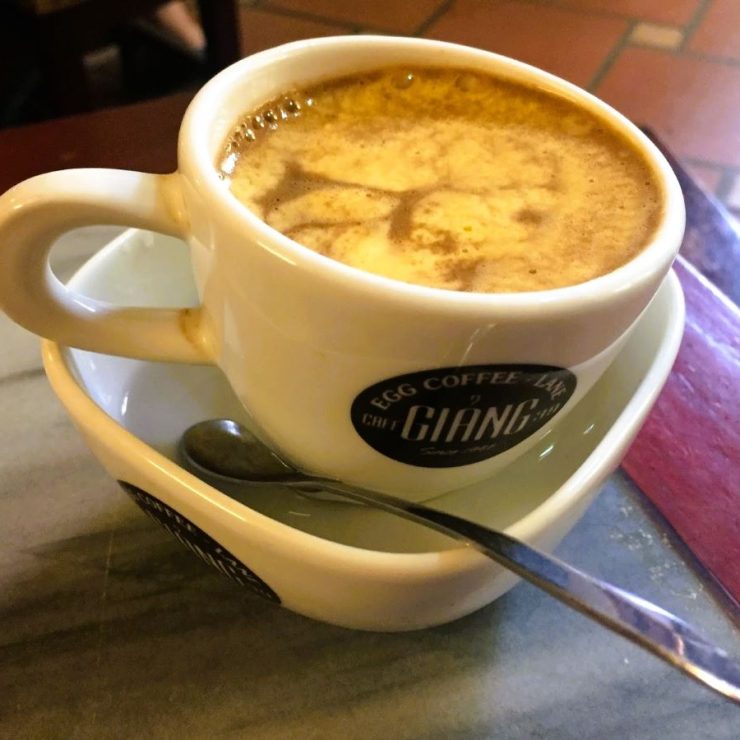
The canon has one more stop, because Hanoi runs on egg coffee — invented in 1946 by Nguyen Van Giang, a Metropole bartender who whisked egg yolk, condensed milk and robusta when fresh milk ran short. His family still serves it at Cafe Giang at 39 Nguyen Huu Huan for about 35,000–40,000 VND; our egg coffee guide tells the story.

🧾 Hanoi Street Food Prices at a Glance (2026)
| Dish | What it is | Typical price (VND) |
|---|---|---|
| Phở bò | Beef broth, rice noodles | 40,000–60,000 (~US$1.60–2.40) |
| Bún chả | Grilled pork with noodles | 40,000–60,000 (~US$1.60–2.40) |
| Bánh cuốn | Steamed rice rolls, pork, mushroom | 35,000–50,000 (~US$1.40–2) |
| Chả cá | Turmeric fish with dill | 70,000+ (~US$2.80+) |
| Bánh mì | Baguette with pate and pickles | 25,000–40,000 (~US$1–1.60) |
| Bún bò Nam Bộ | Dry beef noodle salad | 40,000–60,000 (~US$1.60–2.40) |
| Nem rán | Fried spring rolls (plate) | 30,000–50,000 (~US$1.20–2) |
| Bánh gối | Fried pillow dumpling (each) | 20,000–30,000 (~US$0.80–1.20) |
| Xôi | Sticky rice with toppings | 25,000–45,000 (~US$1–1.80) |
| Bún ốc | Snail noodle soup | 40,000–50,000 (~US$1.60–2) |
| Chè | Sweet soup or pudding bowl | 20,000–35,000 (~US$0.80–1.40) |
| Kem Tràng Tiền | Ice cream scoop, since 1958 | 12,000–15,000 (~US$0.50–0.60) |
US$ figures are rounded at about 25,000 VND to the dollar; expect small variations, more in sit-down addresses.
💡 Local tip: eat at peak hours — 7:00 for pho, 12:00 for bun cha — when the stools are full and the broth never sits still; volume is the city’s best food-safety system. And when you find locals packed onto plastic stools with no menu in sight, sit down and point.
🗺️ Where to Eat Them: Five Zones From Our Door
Dong Xuan Market and its food alley. Hanoi’s largest covered market, set up in 1889, runs daily from about 6:00 to 18:00, later into weekend evenings; the alley behind it is the city’s stronghold for bun oc and banh cuon. A flat 5-minute walk from our door.
Ta Hien and the lakefront. “Beer street” becomes an open-air party every evening: bia hoi at 10,000–15,000 VND a glass and fried snacks travelling between stools. A 7-minute walk away, and the lanes around it feed you from dusk until late. The lake loop is mapped in our Hoan Kiem Lake guide.
Hang Buom and the evening lanes. After dark, the streets between our block and the lake fill with grill smoke and banh goi carts. Tucked among them stands the little Quan De Temple — these guild streets grew around shrines as much as shops. Our hidden gems within 5 minutes of Rey Hotel lists more like it.

Ly Quoc Su and the cathedral corner. Around St. Joseph’s Cathedral, about 10 minutes south, pho counters run from dawn and chè shops take over in the afternoon — our answer when guests want atmosphere without the party.
The Weekend Night Market. Friday to Sunday from about 18:00 to 24:00, Hang Dao closes to traffic and fills with snack grills up to Dong Xuan Market; the walking street runs Friday evening to around Sunday midnight. Go at 18:30, not 20:30; our guide to Hanoi after dark covers the rest.

🧼 Eating Safely: Choose Like a Local
Street food in Hanoi has a safety system, and the system is volume. Choose busy stalls that specialise in one or two dishes and cook to order — high turnover means nothing sits around, and a queue of locals is the best inspection certificate in the city. Start with freshly cooked dishes, use bottled water, and go easy on raw herbs until your stomach agrees with Vietnam; build up to condiments gradually. The full checklist is in our safe street food tips.
⚠️ Allergy and ice note: fish sauce, shrimp paste and peanuts run through almost everything, so tell vendors about allergies early. Ice is generally fine at reputable places, which buy filtered ice; if a cart’s ice looks hand-chipped from an unmarked block, skip the ice.
🏨 Eating Well Without the Hunt
Some nights you want the street; other nights you want a table already yours. Finn Lounge serves a daily breakfast buffet and all-day dining; Palacio de Jade de Cristal covers the Cantonese side of the city’s food story with dim sum and Peking duck; and MOJO Cafe & Bistro in the lobby runs from Vietnamese coffee to evening cocktails. Menus and hours are on our restaurants page. After a long crawl the walk home is short — our complete guide to Rey Hotel Hanoi covers the rooms worth collapsing into.

❓ Frequently Asked Questions
Is Hanoi street food safe to eat?
Yes, when you choose the way locals do. Pick busy stalls that specialise in one or two dishes and cook to order — high turnover means nothing sits around long enough to go wrong. We eat at these stalls every week ourselves. Start with freshly cooked dishes, drink bottled water for your first few days, and read our safe street food tips before your first crawl.
Are there vegetarian options in Hanoi street food?
More than most travellers expect. Look for the word “chay”, meaning vegetarian: several Old Quarter stalls serve pho chay and bun chay with mushrooms or tofu, and banh mi chay carts are common. Always ask before ordering fried snacks, because fish sauce and shrimp paste hide in many broths and condiments. Our front desk keeps a list of vegetarian-friendly stalls nearby.
How much does an average street food meal cost?
Most dishes in this guide cost between 25,000 and 70,000 VND — roughly US$1–3 — and a filling two-course lunch rarely passes 120,000 VND. Drinks are cheap too: bia hoi runs 10,000–15,000 VND a glass and egg coffee about 35,000–40,000 VND. Bring small notes, because few vendors can change a 500,000 VND bill.
Can the hotel recommend specific stalls?
Gladly — it is our favourite question. Our front desk keeps the hand-drawn map of stalls the team actually eats at, each marked with opening hours and an honest verdict. Tell us what you are craving — noodles, grilled pork, something sweet — and we will draw a route that strings three or four together without doubling back.
When is the best time for night market food?
The Weekend Night Market runs Friday to Sunday from about 18:00 to 24:00 along Hang Dao up to Dong Xuan Market. Arrive around 18:30, when the grills are just lit and the lanes are still walkable; by 20:30 it is shoulder to shoulder. For a calmer evening, the Hang Buom lanes fill with food carts most nights of the week.

 English
 Korean
 Chinese (China)
 Japanese
 Vietnamese
 French
 German
 Spanish
 Italian
 Russian
 Chinese (Taiwan)
 Chinese (Hong Kong)
 Thai
 Arabic