

✍️ Por el equipo del Rey Hotel Hanoi — local guides at Rey Hotel Hanoi, 14 Ly Nam De, Hoan Kiem District, Hanoi · 🗓️ Last updated: November 2026 · ⏱️ ~11 min read
Custard-sweet on top, dark and bitter underneath, thick enough that your spoon hesitates for a second before it sinks: egg coffee is Hanoi in a cup. It was born out of scarcity, not luxury — invented by a bartender who refused to let a milk shortage ruin a good coffee — and eight decades later it is the drink our guests ask about before they have even dropped their bags. You will spot it on menus all over the city — egg coffee, cà phê trứng, or just “eggs” on a handwritten board.
Ask our baristas what they most love explaining and the answer is always cà phê trứng. They make it every day in our lobby, and they argue about it almost as often: whose whisk is best, whether the iced version is heresy, how much sweetness is too much. This guide covers the 1946 origin story, exactly how the custard foam is made, what it really tastes like, the best places in the city to try it — including right here at the hotel — and a home recipe that comes surprisingly close. All prices were checked as of late 2026.
We named a proper cup one of the essential things to do in Hanoi, and we meant it. Eight decades on, it remains one of the cheapest luxuries in Vietnam. Here is everything we know.
🥚 The 1946 Origin Story
In 1946 Hanoi was short of almost everything, and fresh milk sat near the top of the missing list. Nguyen Van Giang, a bartender at the city’s grand Sofitel Metropole, faced a practical problem: his patrons expected creamy, European-style coffee, and the milk simply was not there. His solution was radical — whisk egg yolk together with sweetened condensed milk into a custard foam, then float it over strong robusta. It turned out richer than milk had ever been, and nobody has looked back since.
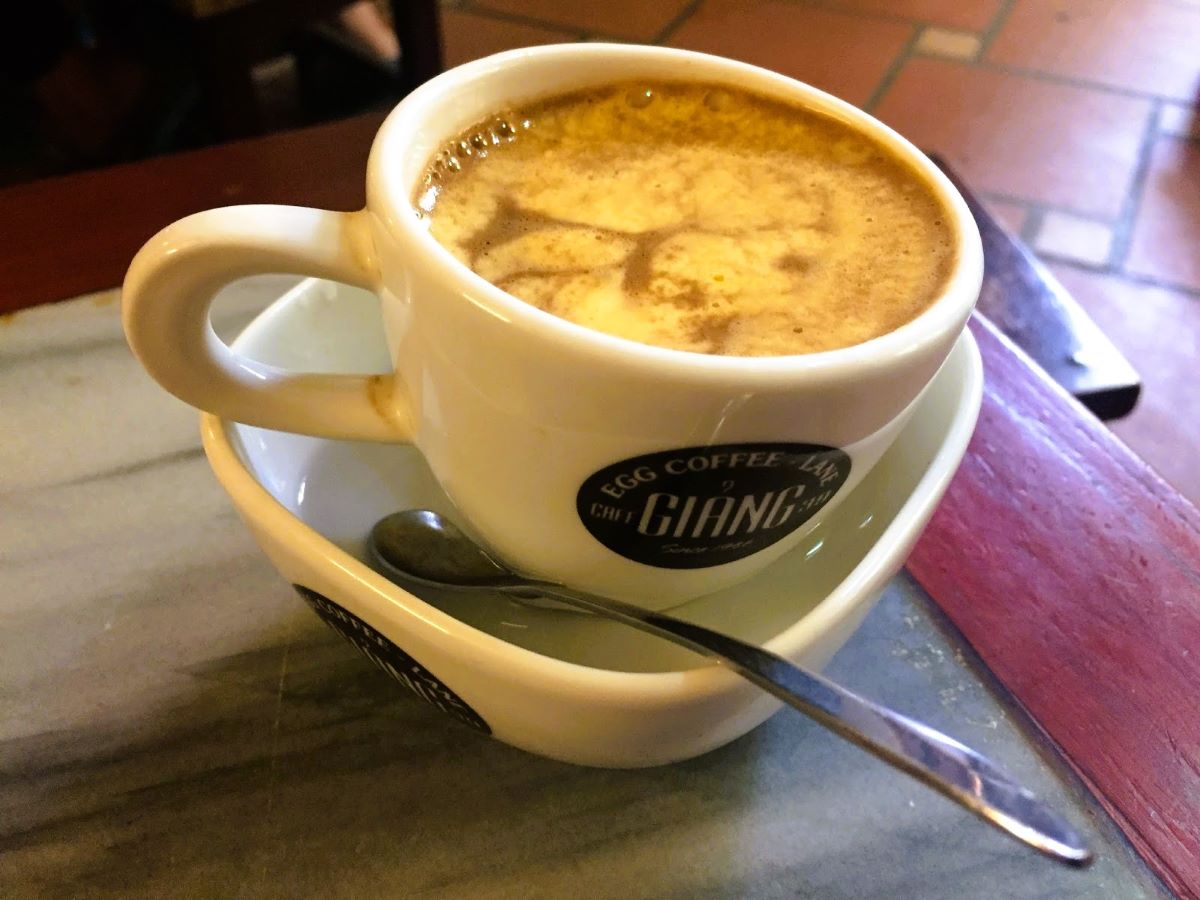
Guests loved it, and Giang eventually left the hotel to open his own café. His family still serves the original recipe at Café Giang, 39 Nguyen Huu Huan, deep in the Old Quarter and about ten minutes on foot from our door. The recipe has barely changed in eighty years: egg yolk, condensed milk, robusta, and a whisk that never stops moving. Step inside and you are drinking in the same room where the recipe settled — nothing here is staged, which is precisely the charm.
What began as a workaround became a signature. The drink spread through the city’s cafés and eventually across Vietnam, but the Old Quarter remains its true home, and the original cup is still the benchmark every other version is measured against. There is a lesson in that, we think: Hanoi’s whole café culture runs on exactly this kind of improvisation — make do, make it delicious, and keep the recipe in the family. Drink it at Giang first; everything else becomes a comparison.
Context helps the story land. Hanoi in 1946 was rationed, patched together and improvising daily, and the grand hotels were no exception. Out of that shortage came a drink with no milk, no cream and no right to be as luxurious as it is — which may be why the city adopted it so completely. Scarcity recipes usually fade when the good years return; this one became the signature.

🧪 How It’s Made
The ingredient list is three lines long; the technique is everything. Egg yolk and sweetened condensed milk are whipped — vigorously, traditionally by hand — until they turn pale gold and hold soft, ribbon-like peaks. Underneath sits robusta, Vietnam’s workhorse bean, brewed strong and dark enough to stand up to all that sweetness. The contrast is the entire point: without the bitter base, the foam is just dessert. Robusta matters here: it brews darker and more bitter than the arabica most visitors drink at home, and that bitterness is the backbone the custard leans on.
Served hot, the foam floats over the coffee and the cup arrives sitting in a bowl of hot water — a water bath that holds everything at drinking temperature down to the last sip, which takes some doing in a Hanoi winter. Served iced, the same foam is poured over robusta and ice, denser and sweeter as it melts downward through the glass. Both versions are built to order, and both reward a café that whips fresh for every cup. The hot version is the one to judge a café by: the water bath is fussy, old-fashioned work, and places that bother with it usually bother with everything else too.
Watch it being made once and you will never gulp one again: the whisk rattles against the metal bowl in a steady rhythm, the yolk and condensed milk climb from yellow to cream, and only when the foam holds its shape does the coffee get poured. Budget about 35,000–40,000 VND per cup at the classic cafés (checked as of late 2026). You are paying for whisking time more than ingredients — which is why the good places never rush a cup. If the café is whisking by hand, order the hot version and thank us later — the slower build suits it.
👅 What It Tastes Like & How to Order
Tiramisu is the comparison everyone reaches for, and it is fair: sweet custard, a whisper of bitterness, a texture somewhere between foam and sauce. The robusta underneath keeps the whole thing from tipping into dessert — take a sip through all the layers at once and you get sugar, silk and dark coffee in the same mouthful. And if you are nervous about the egg: relax. It tastes of custard, not omelette. A glass of water or green tea alongside is not an insult to the barista — it is how locals pace the sweetness.
Ordering your first: go hot, always. Stir lightly — two gentle turns marry the layers without flattening them — then drink it warm, because the foam tightens as it cools. Do not expect latte art; the beauty here is the unbothered pale-gold surface, not a rosetta. Once you have the classic down, the cacao and matcha versions make a fun second round, and the iced one earns its place in August. Learn the two words that matter — nóng for hot, đá for iced — and pace yourself: one cup is closer to a small dessert than a coffee, so plan breakfast accordingly.
One honest warning: robusta is strong, and most of the old cafés do not do a decaf version. If you are sensitive to caffeine, make egg coffee a morning ritual rather than an after-dinner one. If you do end up wide-eyed at 9 p.m., our guide to Hanoi at night will at least point the energy somewhere useful.
☕ The Best Places to Try It
Café Giang, 39 Nguyen Huu Huan, is the original — the family home of the drink. Expect a compact room, a queue at peak hours and the most balanced cup in the city, whipped to order and served hot in its water bath. It is ten minutes on foot from Rey Hotel, and it is the pilgrimage we recommend to every guest who asks where the drink was born. The room is small and the stools are low, so do not rush: give the cup five unhurried minutes and let the layers do their thing.
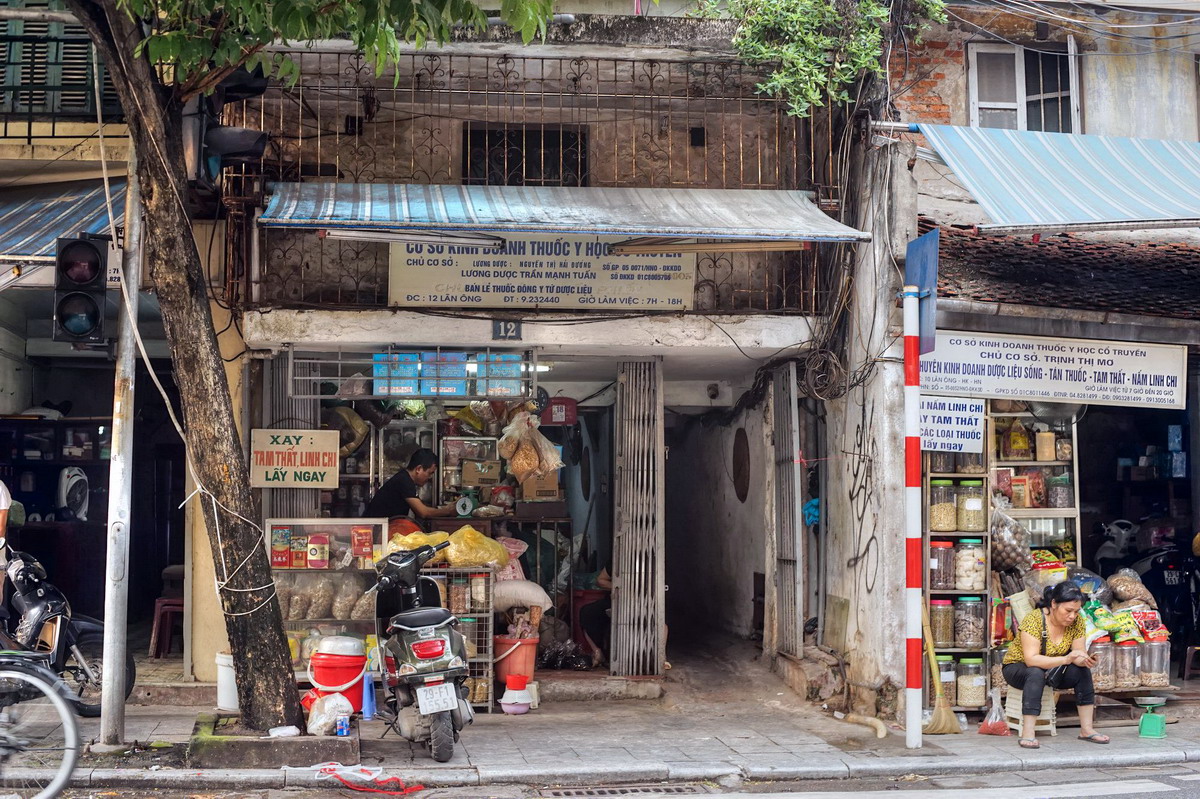
Around it, the Old Quarter and the lake area hum with cafés pouring their own versions: courtyard cafés a short stroll from Hoan Kiem Lake, second-floor rooms above the guild streets, modern espresso bars riffing on the classic. An honest note from our team: quality varies a lot. A good sign is a café that whips each cup to order and serves the hot version in its water bath; a bad sign is foam made in a batch an hour ago and left to sag by the till. Several of the old-school places also close by early evening — one more reason the morning tip below works so well. And if a balcony over the lake is calling, the cafés along the water pour respectable versions too — the view is different, the foam is the same test.
Closer to home, MOJO Cafe & Bistro in our lobby pours Vietnamese coffee all day — robusta, pastries and an egg coffee our baristas are quietly proud of. It is the ideal place to learn the taste before you make the pilgrimage to Giang; see our restaurant page for details, or our complete guide to Rey Hotel Hanoi for the rooms and rooftop views that go with it. Hours skew early at MOJO as well — the pastry case is at its best before noon, and the evening cocktails are a different conversation.
Make a slow morning of it: café-hop on foot between the guild streets — the ancient well at Hang Dao is three minutes from our door, and most of the classic cafés sit within fifteen. Since egg coffee is street food at heart, our Hanoi street food guide pairs the cup with the dishes around it, and our safe street food tips keep your stomach as happy as your camera. If the morning fills up, the loop in our Hoan Kiem Lake guide burns off just enough sweetness to justify round two.

🏠 Make It at Home
The home recipe is humbler but honest. You need one fresh egg yolk, two teaspoons of sweetened condensed milk and a dash of strong robusta or espresso. Set a small heatproof bowl over — not in — just-boiled water, add the yolk and condensed milk, and whisk for 3–5 minutes until the mixture turns pale, thick and ribbon-like; the warm bath helps the foam swell and hold. Brew the coffee strong, pour it into a preheated cup, and float the custard on top. For the full Hanoi ritual, serve the cup sitting in a bowl of hot water; in summer, build it over ice instead. Serving ritual counts for more than you would think: preheat the cup, warm the bowl of water, and bring both to the table together — half the charm of the original is that it stays hot while you talk.
Two notes from our kitchen: use the freshest eggs you can buy, and accept that your arm will tire before the foam does. A hand whisk works and builds character; an electric one works faster. No robusta on the shelf? The strongest espresso you can pull is a fair stand-in. Will it match the cafés? Honestly, no — eighty years of practice is hard to beat in one morning. It will, however, make you appreciate cup number two at Giang even more. And if you are making it for children or caffeine-avoiders, whip the custard over hot chocolate instead — the cacao version is the family favourite for exactly that reason.

📋 Egg Coffee Styles at a Glance (2026)
Before you order, know the menu. Prices below were checked as of late 2026 and vary a little by café; the classic hot and iced cups stay remarkably consistent across the Old Quarter. Which to choose first? The hot classic, no contest — it is the drink as 1946 meant it. The iced version is the summer rewrite, cacao and matcha are for the sweet-toothed, and egg beer is for the evening, ideally after the day’s sightseeing is done.
| Style | What it is | Typical price |
|---|---|---|
| Hot egg coffee (cà phê trứng) | Custard foam floated over hot robusta, cup set in a bowl of hot water | 35,000–40,000 VND |
| Iced egg coffee (cà phê trứng đá) | The same foam poured over robusta and ice | 35,000–40,000 VND |
| Egg cacao (cacao trứng) | Egg foam over hot chocolate instead of coffee | A little more than the classic |
| Egg matcha (matcha trứng) | Egg foam over matcha — the modern twist | A little more than the classic |
| Egg beer (bia trứng) | Egg yolk whipped with sugar and Vietnamese beer — an old bar classic | Varies by bar |
💡 Local tip: go between 9:00 and 11:00 in the morning — the old cafés are calm, the foam is at its freshest and the crowds have not arrived yet. Bring cash: many of the older cafés are cash only, and a classic cup costs less than a fancy latte back home.
⚠️ Good to know: the foam is a lightly cooked, almost raw egg custard. Most established cafés use pasteurised eggs or very fresh eggs bought daily, and regulars have been ordering it for decades. Pregnant travellers and anyone cautious about raw egg may prefer the cooked-style versions or a plain robusta. And remember that condensed milk means sugar — one cup carries a dessert’s worth of sweetness.
❓ Frequently Asked Questions
What is egg coffee?
A Hanoi specialty: egg yolk whipped with sweetened condensed milk into a custard foam, served over strong robusta coffee, hot or iced. Most classic cafés charge about 35,000–40,000 VND a cup, and the drink is richer and sweeter than any latte. Ask for it nóng (hot) or đá (iced) — those two words cover every menu in the city.
Who invented egg coffee?
Nguyen Van Giang, a bartender at Hanoi’s Sofitel Metropole, invented it in 1946 when fresh milk was scarce. He whisked egg yolk with condensed milk and robusta, and his family still serves the original recipe at Café Giang today, whisked to order just as it was then.
How much does egg coffee cost in Hanoi?
About 35,000–40,000 VND per cup (checked as of late 2026) at the classic cafés. Trendier spots around the Old Quarter and the lake may charge a little more, especially for the cacao and matcha versions. Even so, the classics remain some of the best-value coffee you will find anywhere in the city.
Where is the original egg coffee café?
Café Giang at 39 Nguyen Huu Huan, in the Old Quarter — founded by the inventor’s family and still serving his recipe. It is about ten minutes on foot from Rey Hotel Hanoi, and the modest façade is part of the charm — the fame is all in the foam.
Does egg coffee taste like eggs?
No — it tastes closer to tiramisu or a liquid custard, with the bitterness of robusta underneath. Warm egg only shows up when the coffee is weak, which is exactly why the original recipe uses such a strong brew. First-timers usually switch sides within a single cup: the bitterness wins them over faster than the sweetness does.

 English
 Korean
 Chinese (China)
 Japanese
 Vietnamese
 French
 German
 Spanish
 Italian
 Russian
 Chinese (Taiwan)
 Chinese (Hong Kong)
 Thai
 Arabic