

✍️ By the Rey Hotel Hanoi Team — local guides at Rey Hotel Hanoi, 14 Ly Nam De, Hoan Kiem District, Hanoi · 🗓️ Last updated: November 2026 · ⏱️ ~12 min read
Ask anyone on our team what makes Hanoi special and you will rarely hear a list of monuments first. You will hear about the woman selling broth at 5:40 in the morning, the way the whole city walks around Hoan Kiem Lake after dinner, and that moment when a train slides past you close enough to touch on a street that is famous for exactly that. Hanoi is not a city you tick off — it is a city you settle into. And our job, from our front desk at Khách sạn Rey Hà Nội on Ly Nam De street, is to help you settle in fast.
We wrote this guide the way we answer questions at the concierge desk: with real prices (checked as of late 2026), honest timing advice, and the small details that only people who live here know. Every suggestion below is reachable on foot from our door or within a day trip, because that is how we explore the city ourselves.
One tip before the list: Hanoi rewards rhythm. Mornings belong to the lake, the markets and the parks before the heat and the motorbikes build; afternoons are for museums, temples and coffee; and the city only truly switches on after sunset. Plan around that rhythm and everything below gets easier. Not sure when to come? Our month-by-month weather guide has you covered.
🏮 The 15 Best Things to Do in Hanoi
1. Circle Hoan Kiem Lake at dawn
Between 5:30 and 7:00 in the morning, the three-kilometre loop around Hoan Kiem Lake belongs to Hanoi itself: tai chi clubs under the banyan trees, couples doing badminton-by-lamppost, and vendors selling sticky rice to joggers. It is free, it is flat, and it is the single best introduction to the city. Cross the red-painted Huc Bridge to Ngoc Son Temple (about 50,000 VND, children under 15 free) and look for the giant turtle stuffed animal in the glass case — a nod to the lake’s 15th-century legend of the sword returned to the Golden Turtle. Our full Hoan Kiem Lake guide maps the whole loop, and from Rey Hotel the water is a 7-minute walk.
2. Get lost in the Old Quarter’s 36 streets
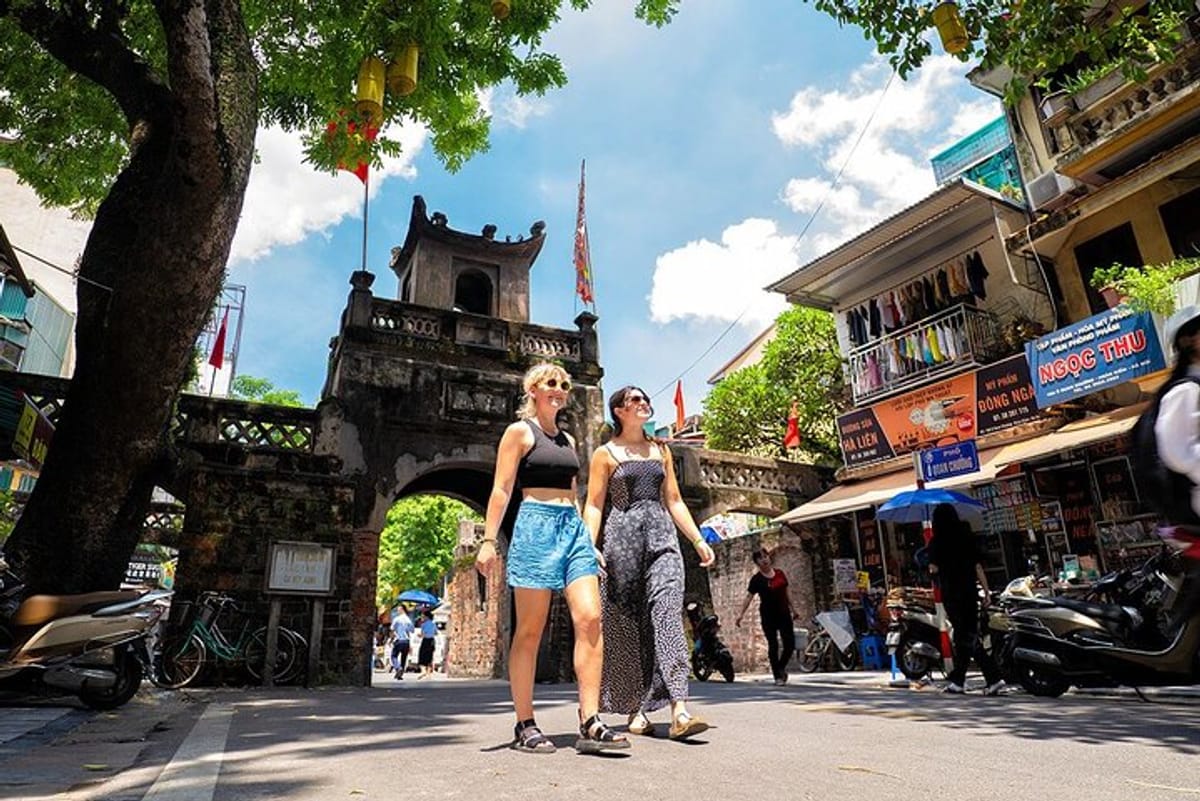
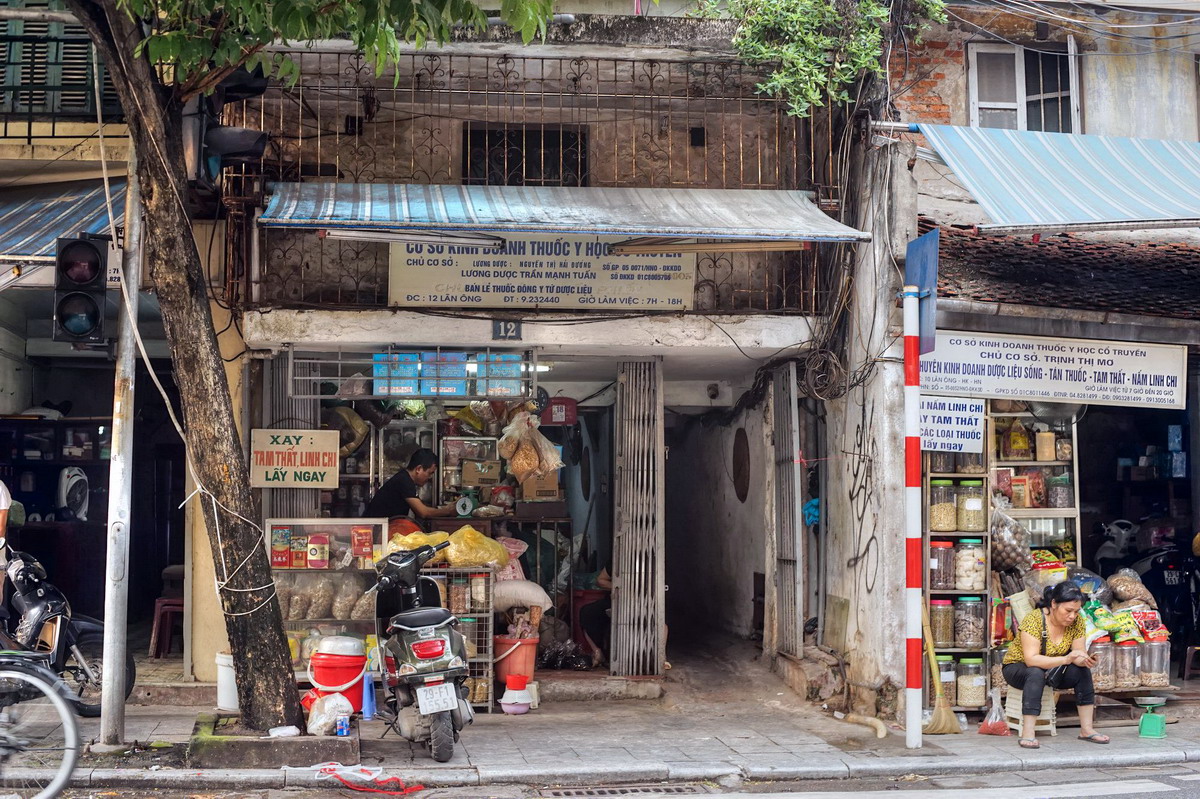
The Old Quarter is free to wander — no ticket, no gate — and it is organised the way it has been for centuries, by guild: Hang Ma sells festive decorations, Hang Bac jewellery, Lan Ong herbal medicine, Hang Dao silk and shoes. Start at the Old City Gate (Quan Chuong), one of the last surviving gates of the citadel wall, then let one street pull you into the next. In the northern lanes, five minutes from our door, you will find the Quan De Temple and the ancient well at Hang Dao that most tourists walk straight past — our hidden gems within 5 minutes of Rey Hotel lists them all.
3. Eat your way through the street-food canon
Pho for breakfast, bun cha for lunch, banh mi whenever the cart looks busy: Hanoi’s street food is the best reason to come, and most dishes cost between 25,000 and 70,000 VND. The classics to hunt: pho bo with hand-cut rice noodles, bun cha (grilled pork with noodles — the dish Anthony Bourdain and President Obama made famous), banh cuon, cha ca turmeric fish, and banh mi stuffed with pate and pickles. Follow the plastic stools: a busy stall with a high turnover is almost always a safe stall. Our street food guide covers 12 must-try dishes and where to find them, and for hygiene peace of mind read our safe street food tips before you dive in.

4. Drink egg coffee where it was invented
In 1946, a Metropole bartender named Nguyen Van Giang whisked egg yolk with condensed milk and robusta coffee because fresh milk was scarce — and accidentally invented Hanoi’s signature drink. His family still serves it at Cafe Giang at 39 Nguyen Huu Huan, ten minutes from our door, for about 35,000–40,000 VND a cup: custard-sweet on top, bitter underneath, served in a bowl of hot water to keep it warm. Order it hot your first time, then try the cacao or matcha versions. Our egg coffee guide explains the history and lists the best cafés, including MOJO Cafe & Bistro right in our lobby.
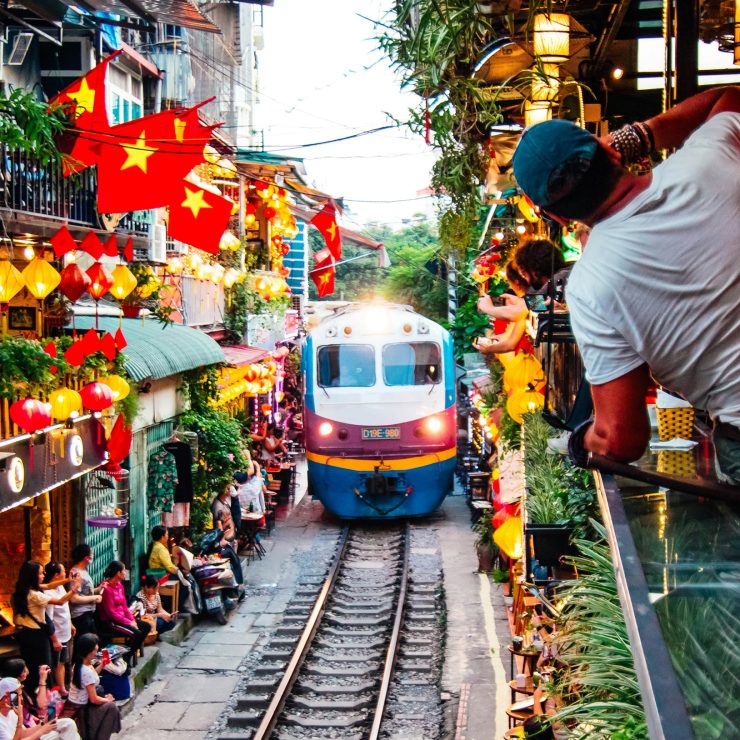
5. Watch the train squeeze down Train Street
Kham Thien’s famous rail corridor — where a working train passes within a metre of living-room doorways — is Hanoi’s most photographed half hour. The rules have tightened in recent years: you can only sit inside the cafés along the tracks, never stand on the rails. Trains typically rumble through in the mid-afternoon (around 15:00–16:30) and in evening slots between 19:00 and 22:00, but the timetable changes daily, so confirm with your café and arrive 30–45 minutes early for a front-row table. Our Train Street guide has the 2026 rules, entrances and etiquette.

6. Pay your respects at the Ho Chi Minh Mausoleum complex
Ba Dinh is where modern Vietnam is staged, and it is free. The Ho Chi Minh Mausoleum opens mornings only (7:30–10:30 April–October, 7:30–11:00 November–March) and closes every Monday and Friday; it also shuts for annual maintenance around early September to early November — it reopens on 3 November 2026. Dress with shoulders and knees covered and leave bags behind. Afterwards walk the Presidential Palace grounds, Uncle Ho’s modest Stilt House and the lotus-shaped One Pillar Pagoda. The Imperial Citadel of Thang Long, a UNESCO site, sits directly behind (about 70,000 VND). Timing and etiquette details are in our Ba Dinh complex guide.
7. Stand in the courtyards of the Temple of Literature
Founded in 1070, Vietnam’s first university is a sequence of five walled courtyards — lotus ponds, stone turtle steles bearing the names of doctorate graduates going back to the 15th century, and the multi-tiered Khue Van Cac pavilion that appears on the 100,000 VND note. Entry is 70,000 VND (about 35,000 for students, under-15s free), open roughly 8:00–17:00. Go on a weekday morning when local students in traditional ao dai come for graduation photos. If your dates line up, the evening 3D-mapping show (“Temple of Literature by Night”, 199,000 VND, 18:30–22:00) is a beautiful after-dark alternative.
8. Climb the Flag Tower at the Imperial Citadel
Technically part of the same Ba Dinh morning as number six, but the citadel deserves its own hour: 1,000 years of royal Vietnam layered in one site, from the 11th-century dynasties to the 20th-century command bunkers with maps still on the walls. Climb the red Flag Tower for the best free-ish view in the city (the citadel ticket is about 70,000 VND), and don’t skip the archaeology basement where excavated foundations sit under glass walkways. The site is remarkably quiet compared with the Old Quarter — you will hear birdsong — and the lighting is beautiful in the late afternoon. Combine it with the Mausoleum next door and you have Hanoi’s whole political history in one morning’s walk.
9. Walk the corridors of Hoa Lo Prison
The French built Hoa Lo in 1896 to hold Vietnamese independence fighters; two generations later it held American POWs who sarcastically nicknamed it the “Hanoi Hilton”. The museum tells both stories — the guillotine room is sobering, the escape-tunnel exhibit gripping. Entry is 50,000 VND, with a well-produced audio guide for a little extra, and it is a 15-minute taxi or a 30-minute walk from the Old Quarter. Go early or late: the corridors get crowded midday. This is the one Hanoi museum that lingers with most of our guests long after the trip.
10. Watch a water puppet show at twilight
Water puppetry began in the flooded rice paddies of the Red River Delta a thousand years ago, and the Thang Long Water Puppet Theatre on Dinh Tien Hoang keeps the tradition alive with a live orchestra of bamboo flutes, drums and the glorious single-string dan bau. Yes, it is touristy; yes, it is still wonderful — the puppeteers stand waist-deep behind a bamboo screen the whole show. Tickets run 100,000–200,000 VND depending on seats, shows last about 50 minutes and run daily, several per evening. Book ahead in high season; the theatre sits right on the lake, so pair it with dinner nearby.
11. Shop the Weekend Night Market on Hang Dao
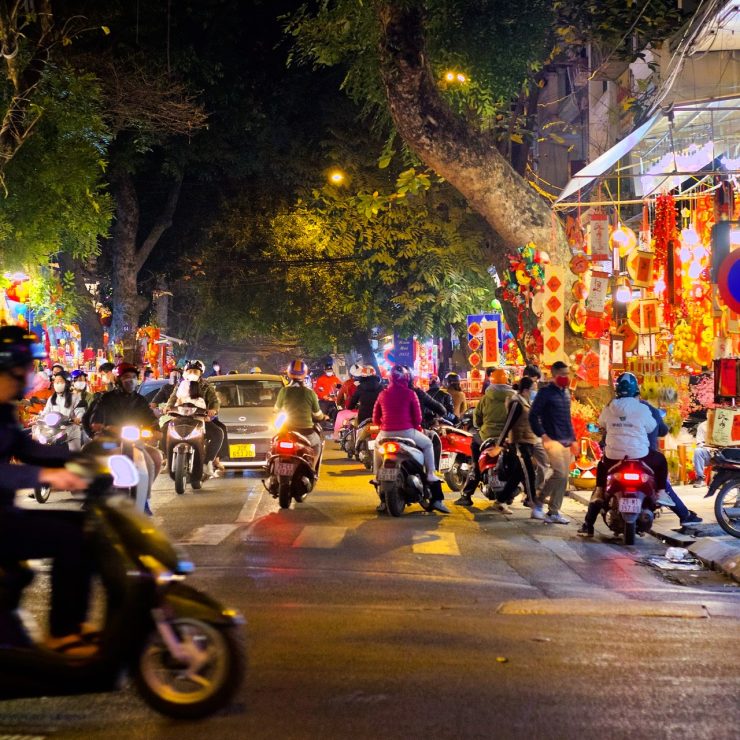
Every Friday, Saturday and Sunday from about 18:00 to midnight, the city closes Hang Dao, Hang Ngang and Hang Duong to traffic and strings them with lights from the lake all the way to Dong Xuan Market — a kilometre of snacks, souvenirs, balloon toys and locals doing their evening promenade. Prices are negotiable; go at 18:30 when it opens, not 20:30 when it is shoulder-to-shoulder. The market literally ends at the doorstep of our neighbourhood — five minutes from the hotel — which makes an easy after-dinner loop. Our night-time guide covers the market plus the rest of Hanoi after dark.
12. Toast the evening with bia hoi on Ta Hien
“Bia hoi” is fresh, unpasteurised draught beer brewed daily and sold from steel taps on the pavement for 10,000–15,000 VND a glass — about forty cents — at roughly 3% strength. The epicentre is Ta Hien street near the lake, where low stools spill across the road every evening and strangers clink glasses over plates of fried fermented pork and roasted peanuts. It is less a bar scene than a street party that happens every night. Bring small notes, pace yourself, and remember the last glasses go down best when the ice has melted — locals say bia hoi is made to be drunk quickly.
13. Haggle your way through Dong Xuan Market
Set up in 1889, Dong Xuan is Hanoi’s largest covered market: three floors of fabric, shoes, tea, dried goods and kitchenware beneath a Soviet-style concrete roof. It is open daily from about 6:00 to 18:00 — and it is the northern anchor of the weekend night market. Bargaining is expected and cheerful; start at about 60% and settle in the middle with a smile. Even if you buy nothing, the food court in the basement alley serves excellent bun oc (snail noodles) and banh cuon. From Rey Hotel it is a flat five-minute walk — our guests pop in between breakfast and the lake. Go early on a weekday if you want to see the market doing its real work: wholesale traders loading silk and dried squid before the tourists wake up, which is the most photogenic hour the building has.
14. Take a day trip to Ninh Binh’s karst rivers
Two hours south of Hanoi, the limestone towers of Ninh Binh rise straight out of rice paddies — it is called “Ha Long Bay on land” for good reason. Row a sampan through cave tunnels at Tam Coc (250,000 VND) or the grander Trang An (300,000 VND), climb the 500 steps of Mua Cave (100,000–150,000 VND) for the classic panorama, and visit the 10th-century capital at Hoa Lu. Organised day tours run from about US$25–40 including transfers; going independent by train or limousine van is easy too. Our Ninh Binh day-trip guide compares all the options, and the hotel can arrange a driver the night before.

15. Do one Hanoi evening properly slowly
Our most repeated piece of advice: schedule one evening for nothing. Start with coffee at MOJO Cafe & Bistro in our lobby, walk seven minutes to the lake to watch the lights come on around Turtle Tower, eat pho or bun cha at a stall you like the look of, then finish with a nightcap — a cocktail at MOJO or a quiet beer in our garden courtyard. Hanoi’s magic is cumulative, not scheduled, and the travellers who love this city most are the ones who give it one unhurried night. If you are choosing where to base yourself for exactly that, our complete guide to Rey Hotel Hanoi starts with the rooms and ends with the rooftop views.

💰 Hanoi Entrance Fees at a Glance (2026)
| Attraction | Adult ticket | Notes |
|---|---|---|
| Hoan Kiem Lake loop | Free | Ngoc Son Temple about 50,000 VND |
| Old Quarter streets | Free | No ticket needed |
| Văn Miếu | 70,000 VND | ~35,000 students; night show 199,000 VND |
| Imperial Citadel of Thang Long | ~70,000 VND | UNESCO site behind the Mausoleum |
| Hoa Lo Prison | 50,000 VND | Audio guide extra |
| Ho Chi Minh Mausoleum | Free | Mornings only; closed Mon & Fri |
| Thang Long Water Puppets | 100,000–200,000 VND | About 50 minutes, daily shows |
| Tam Coc boat (Ninh Binh) | 250,000 VND | Day trip about 2 hours each way |
💡 Local tip: change money at an authorised exchange counter or withdraw from a bank ATM (Vietcombank, BIDV) — 500,000 VND notes look new and shiny but no street vendor can give change for one. Ask our front desk to break large notes any time.
⚠️ Safety note: crossing Hanoi traffic is a walking meditation — move slowly, steadily and predictably and the motorbikes flow around you. Never sprint. At Train Street, stay in the cafés: standing on the tracks is prohibited and genuinely dangerous.
❓ Frequently Asked Questions
How many days do you need in Hanoi?
Three days is the sweet spot: one day for the Old Quarter and Hoan Kiem Lake on foot, one day for the Ba Dinh complex and the museums, and one flexible day for Train Street, coffee and shopping — or a Ninh Binh day trip. Travellers with five days usually add Ninh Binh plus one more slow weekend-market day, which is exactly the pace locals live at.
Is Hanoi’s Old Quarter walkable from Rey Hotel?
Completely. Rey Hotel Hanoi sits at 14 Ly Nam De, on the northern edge of the Old Quarter itself: Dong Xuan Market is about a 5-minute walk, Hoan Kiem Lake 7 minutes, St. Joseph’s Cathedral 10 minutes, and the Old City Gate even closer. Nearly everything in this guide needs no transport at all, and our walkable Hanoi guide lists the routes.
What is the best month to visit Hanoi?
October and November are the classic picks — cool, dry, golden light — with March and April a close second before the summer heat. December to February is atmospheric but chilly, and June to September is hot with heavy afternoon showers. Our month-by-month guide breaks down temperatures, festivals and prices for every month.
Is Train Street open to tourists in 2026?
Yes, but only from the cafés along the tracks — standing or walking on the rails is prohibited, and police periodically enforce it. Buy a drink, take a seat, and watch the scheduled passings (typically mid-afternoon and evening). Rules and timings change, so read our current Train Street guide before you go.
How much money do I need per day in Hanoi?
Budget travellers eat phenomenally on 500,000–700,000 VND (about US$20–28) a day excluding accommodation; mid-range travellers usually spend around 1,000,000–1,500,000 VND (US$40–60) with tours, taxis and dinners. Entrance fees in this guide total under US$30 even if you do everything — Hanoi remains one of the best-value capitals in Asia.

 English
 Korean
 Chinese (China)
 Japanese
 Vietnamese
 French
 German
 Spanish
 Italian
 Russian
 Chinese (Taiwan)
 Chinese (Hong Kong)
 Thai
 Arabic