

✍️ Vom Rey Hotel Hanoi Team — lokale Reiseführer im Rey Hotel Hanoi, 14 Ly Nam De, Hoan Kiem District, Hanoi · 🗓️ Zuletzt aktualisiert: November 2026 · ⏱️ ~12 Min. Lesezeit
“Wann ist die beste Zeit für einen Besuch in Hanoi?” ist die häufigste Frage, die unsere Gäste beim Check-in stellen — meist während wir ihnen eine Karte überreichen. Die kurze Antwort der Rezeption lautet: Rey Hotel Hanoi: Oktober und November an erster Stelle, dicht gefolgt von März und April. Diese beiden Zeitfenster verbinden die mildesten Temperaturen mit dem trockensten und sonnigsten Wetter, das diese Stadt im ganzen Jahr zu bieten hat, und es sind die Monate, die unser eigenes Team für einen Erstbesuch wählen würde.
Die längere Antwort ist der Rest dieses Leitfadens, denn Hanoi kennt keine subtilen Jahreszeiten. Die Stadt hat vier genuinely unterschiedliche Persönlichkeiten: einen kühlen, trockenen Winter; einen feuchten, schwülen Nieselregen, den wir mua nồm nennen; einen heißen, gewittrigen Monsunsommer; und zwei goldene Übergangsphasen, die die Einheimischen wie ein Geheimnis hüten. Wir sind ein Hotelteam, keine Meteorologen — was folgt, ist Rezeptionsweisheit aus Jahren des Gästebegrüßens in jeder Jahreszeit, abgeglichen mit den städtischen Durchschnittswerten Stand Ende 2026.
Eine Regel vorab: Hanoi bricht gelegentlich seine eigenen Regeln. Ein trockener Oktober kann Sie mit einer regnerischen Woche überraschen; eine Kältewelle im Januar kann die schärfste seit Jahren sein. Betrachten Sie alles Folgende als die typische Ausprägung jedes Monats, prüfen Sie dann eine Live-Vorhersage für Ihre tatsächlichen Daten, bevor Sie packen — und fragen Sie uns an der Rezeption, wenn Sie eine zweite Meinung wünschen.
🌦️ Hanois vier Jahreszeiten auf einen Blick
Hier ist das ganze Jahr in einer Übersicht. Der grobe Rhythmus der Stadt ist einfach: kühl und trocken von November bis April, heiß und schwül mit starken Schauern von Mai bis September oder darüber hinaus, stärkster Regen von Juli bis September — und die beiden Idealphasen liegen an den jeweiligen Rändern dieser Teilung. Die Zahlen sind typische Muster und Durchschnittswerte, keine Garantien für einen einzelnen Tag.
| Monat | Typische Temperatur | Niederschlag | Unser Urteil |
|---|---|---|---|
| Januar | Kälteste Phase; einige Nächte fallen unter 10 °C | Überwiegend trocken | Frische, ruhige Straßen — packen Sie mehrere Schichten ein |
| Februar | Kalte Morgen, mildere Nachmittage; feuchter Nieselregen kann beginnen | Leichter Nieselregen (mua nồm) | Tet fällt auf Ende Januar oder Februar — prüfen Sie die Termine |
| März | Kühl bis mild; feuchte mua-nồm-Wochen häufig | Häufiger Nieselregen | Gut mit Regenjacke und schnelltrocknender Ausrüstung |
| April | Mild, werdend warm, da der Sommer näher rückt | Trockener Anfang, Schauer gegen Monatsende | Idealphase — besonders Anfang April |
| Mai | Der Sommer kommt; heiße Tage steigen auf 30–38 °C | Erste richtige Schauer | Frühe Morgen, schattige Nachmittage |
| Juni | Heiß und schwül | Regelmäßige Nachmittagsschauer | Nachmittage in Museen und Cafés |
| Juli | Heiß und schwül, an Spitzentagen 30–38 °C | Zu den stärksten Regenfällen des Jahres | Planen Sie Innenpausen von 13:00–15:00 ein |
| August | Heiß und schwül | Zu den stärksten Regenfällen des Jahres | Flexible Pläne, schnelltrocknende Kleidung |
| September | Anfangs heiß, gegen Monatsende deutlich nachlassend | Der Regen beginnt abzunehmen | Die Schwelle zum Herbst — wöchentliche Besserung |
| Oktober | Mild und hell — die angenehmste Phase des Jahres | Leichter, nachlassender Regen | Das goldene Zeitfenster |
| November | Cool and dry; winter averages 17–22 °C | Very little | The golden window, part two |
| December | Cool days, chilly mornings | Überwiegend trocken | Moody photos and egg-coffee weather |
Those are city-wide typicals of the kind we quote when a guest asks at the desk, not a forecast. For your specific week a live forecast beats any calendar, and our team is happy to sanity-check your itinerary when you arrive — it is one of our favourite conversations.
🥶 Winter and “Mua Nồm” (December–February)
Hanoi winter is not tropical-winter. From December through February the mornings arrive genuinely chilly — some nights in the coldest stretch dip below 10 °C — and locals wrapped in scarves will tell you, with complete sincerity, that Hanoi cold feels colder than the thermometer says. The payoff is dry, crisp air, a moody grey-gold light that photographers love, and streets you can walk for hours without overheating. Pack layers you can shed by ten in the morning, and know that the Hoan Kiem Lake tai chi clubs still gather from about 5:30–6:00 whatever the temperature.
This is egg-coffee weather, by design. The drink was invented in 1946 by Nguyen Van Giang, a Metropole bartender whisking egg yolk with condensed milk and robusta because fresh milk was scarce, and his family still serves it at Cafe Giang on Nguyen Huu Huan street for about 35,000–40,000 VND a cup. A hot cup in a warm café with grey skies outside is the definitive Hanoi winter afternoon — our Eierkaffee-Leitfaden has the full story and the best cafés.
From February into March the city often meets mua nồm, a stretch of humid, damp drizzle when moisture hangs in the air, floors turn slick and laundry dries slowly. It is not dramatic rain — more a grey, damp haze that can last days — and it passes. Quick-dry fabrics and a light shell make it a non-issue; museums, temples, long lunches and another egg coffee make it a pleasure.
Tet, the Lunar New Year, falls in late January or February — the exact dates shift every year, so check the calendar for your travel year. The city dresses up beautifully and travel peaks hard; our advice on booking around it is in the prices section below.

🌧️ Summer (May–September)
From May the summer engine starts: hot and humid, with peak days pushing 30–38 °C and the year’s heaviest rain falling between July and September. The saving grace of Hanoi’s summer rain is its shape — it tends to arrive as a dramatic afternoon downpour rather than an all-day soak: thunder, a proper dump of water, then clearing skies. Locals plan around it the way coastal towns plan around tides, and after a week in the city you will too.
The rhythm works. Streets wake early: markets trade in the cool of the morning, and the lakeside paths fill from around 5:30 to 6:00. Do the same — see the outdoors before 9:00, then follow the local lead and go indoors from roughly 13:00 to 15:00: museums, temples, a long lunch, our spa, a slow coffee. When the air eases toward evening the city visibly relaxes, and nights out run late — that is when our things-to-do guide earns its keep, splitting the city neatly into morning lists and after-dark ones. Our getting-around guide covers the days when a Grab beats walking through a downpour.

Summer suits travellers who do not mind heat and want the city at its greenest and least crowded; it is also when rates are friendliest. If heat drains you, choose the shoulder months instead. But if you can adopt the local rhythm — early starts, a shaded midday, late evenings — summer Hanoi is rewarding and never boring.
🍂 Autumn (September–November)
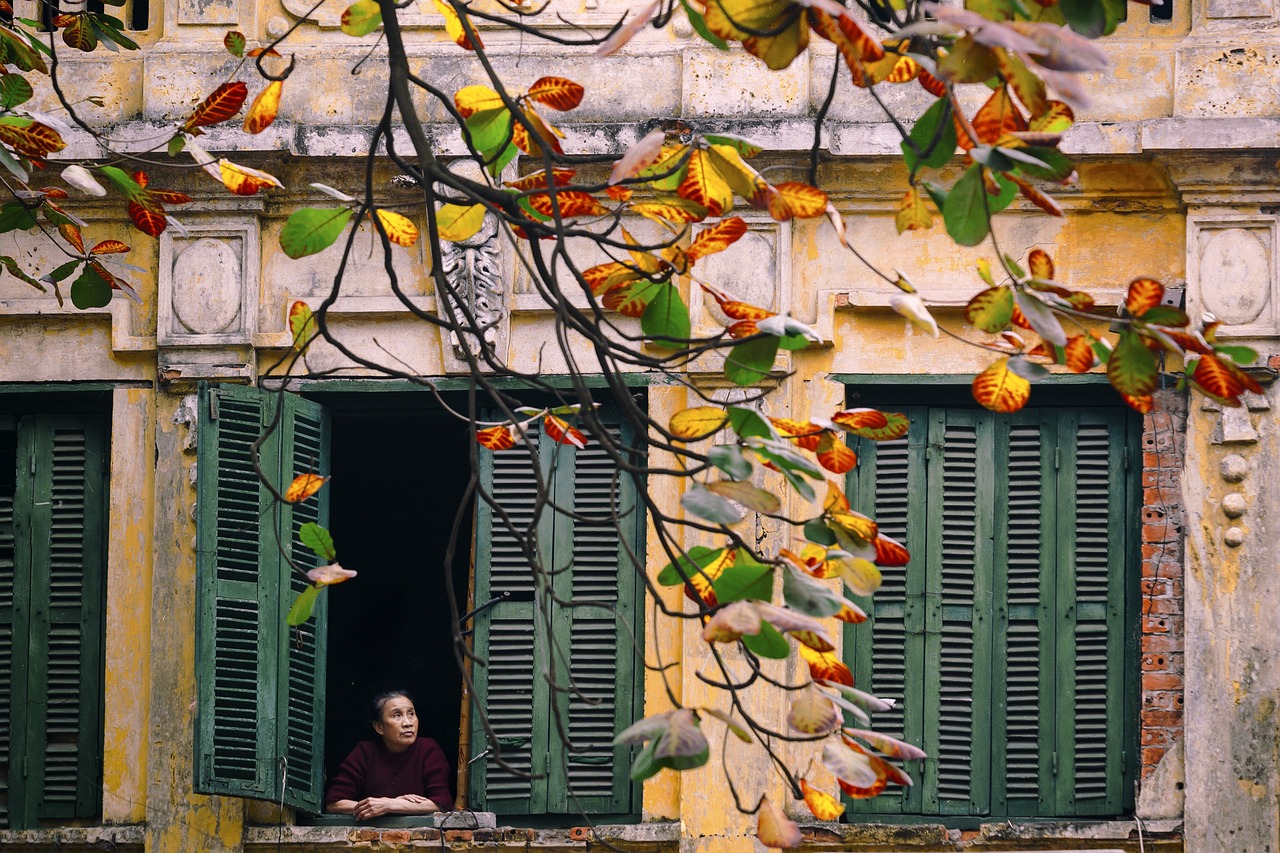
Ask a Hanoi local for the best season and you will get one word: autumn. September starts hot and showery — it is the hinge of the year, improving week by week — and by October the city settles into its most comfortable stretch: mild, drier, with a golden quality to the light that photographers plan whole trips around. November keeps the gift and adds the first cool nights of winter. In this air, the morning loop around Hoan Kiem Lake — tai chi clubs, coffee stalls, the lake doing its slow morning warm-up — is a pleasure rather than a feat.
Autumn is also when the city eats and celebrates best. Seasonal specialties return to menus across the Old Quarter, and the Mid-Autumn lantern festival typically lights up September or early October with lanterns strung across the lanes. Much of the food calendar turns over with the season, which is one more reason our street food guide is worth reading with your dates in hand.
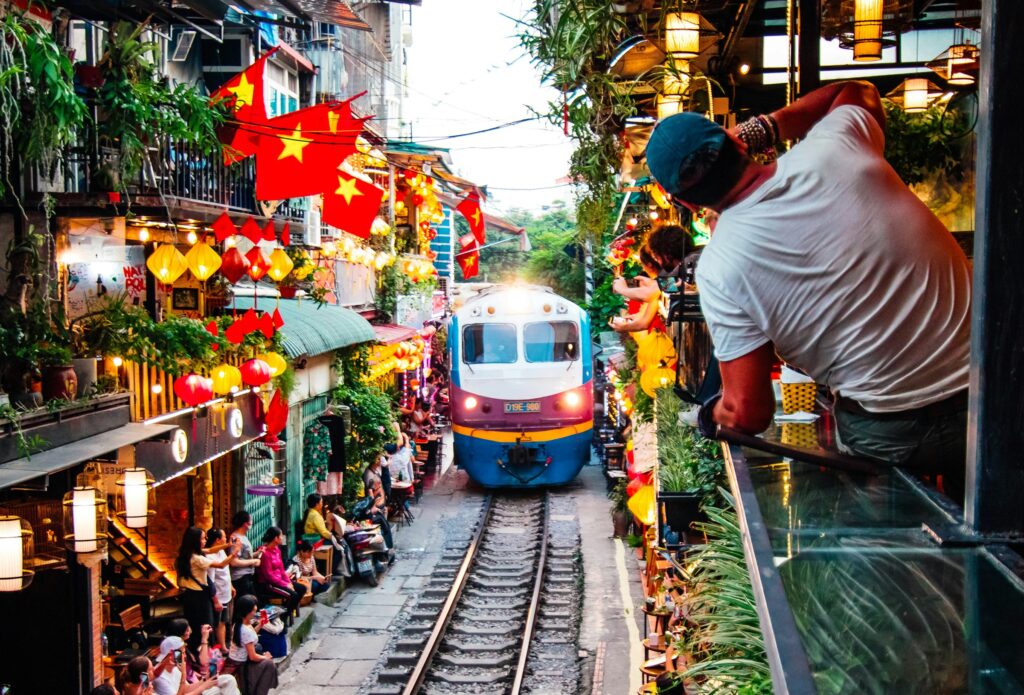
The honest cost of the best weather is company: October and November draw the biggest crowds, and hotel rooms and day tours fill faster than at any other time of year. If Train Street is on your list, our Train Street guide covers the café-only rules and the daily schedule — the cafés run all year, whatever the season.
🌸 Spring (March–April)
Spring runs March into April: warm days returning, the tail of the mua nồm drizzle clearing as the weeks pass, and the city turning green ahead of summer. April is the gentler of the two — by then the damp stretch has usually given way and the serious heat has not yet arrived, which is exactly why early April shares the sweet spot with autumn. Light jackets come off by mid-morning; plans made for outdoors rarely get rained off.
One catch worth planning for: Tet falls in late January or February, with exact dates changing every year, so check the lunar calendar for your travel year. If your dates align with the run-up to Tet you will meet the city’s festive build-up — decorations going up, markets filling, the atmosphere families travel across the country for. If they fall just after, expect a calmer city shaking itself back to life. Either way, spring evenings suit the walking street and the night market beautifully; our night market and nightlife guide covers the Friday-to-Sunday route.
And if this guide is part of trip you are currently building, our complete guide to Rey Hotel Hanoi covers the rooms, the dining and the neighbourhood we would walk you through first — or simply write to us through our site and we will help you shape the dates.
🧳 What to Pack, Season by Season
Packing for Hanoi is really packing for two cities a few months apart. The quick version by season:
🧥 For winter (December–February)
Layers are the whole game: t-shirts for midday, a warm sweater and a proper jacket for mornings and nights, something for the below-10 °C evenings, and comfortable closed shoes. Scarves are easy to buy here at fair prices if you under-pack — our guests’ souvenir photos often feature them.
☂️ For summer (May–September)
Breathable clothes, a compact umbrella or light rain shell, quick-dry shoes, a hat, sunscreen and a refillable water bottle. Accept in advance that you will be caught in one downpour, plan the 13:00–15:00 indoor break accordingly, and the weather becomes part of the story rather than the villain of it.
🌸 For the sweet spots (October–November and March–April)
Light layers for warm days plus one warmer layer for evenings, and comfortable walking shoes above all. Bring modest clothing too — shoulders and knees covered — for the temples and for the Ho Chi Minh Mausoleum, which enforces its dress code strictly. A light rain shell earns its place in both months.
👟 Any time of year
Broken-in walking shoes are the single most important item in the suitcase — the Old Quarter is explored on foot, one lane at a time. Add a day bag that closes properly, a portable charger for map-heavy days, and leave real space for what you will buy: everything from silk to egg-coffee mugs is available here.
💰 Prices and Crowds by Season
The weather writes the price calendar. The October–November and March–April sweet spots are high season: rooms fill faster, the most popular room categories go first, and day-trip buses run full, so booking ahead in those windows is genuinely worth it. The hot, showery summer months and the damp late-winter drizzle are the quiet stretch — availability is easy and rates often soften, which is why we tell flexible travellers to consider May or late August with their eyes open.
Then there is Tet. Because the Lunar New Year falls in late January or February — dates change every year, so check yours — the entire country travels at once: trains, flights and buses sell out days in advance, family-run restaurants close for a few days, and the city is both at its most beautiful and at its most logistically demanding. If Tet is on your itinerary, book accommodation and transport as early as you possibly can.
⚠️ Tet warning from our desk: in the week around Tet, do not leave transport to the last minute. Book trains, buses and rooms early, keep some cash aside, and check which of your must-eat places close for the holiday. The upside — lanterns, decorations and a city dressed for its biggest celebration — is worth every bit of the planning.

Much of Hanoi ignores the calendar anyway. The Weekend Night Market runs Friday to Sunday year-round; egg coffee tastes the same in February as in October; and day trips such as the Perfume Pagoda and Ninh Binh run in every season — our Hanoi tours guide compares the main options. For flights, visas and the airport transfer itself, start with our how to get to Hanoi guide.
💡 Local tip: borrow our staff’s daily rhythm in any season — outdoors early (Hoan Kiem Lake is loveliest before 8:00), indoors from 13:00 to 15:00 in the hot months, and back out after about 17:00 when the city relaxes. Plan each day around that shape and Hanoi feels easy rather than exhausting, whatever the forecast says.
❓ Frequently Asked Questions
Was ist der beste Monat, um Hanoi zu besuchen?
Oktober und November sind die klassische Antwort — mild, trocken und golden —, dicht gefolgt von März und April, bevor die Sommerhitze einsetzt. Beide Zeitfenster verbinden das angenehmste Sightseeing-Wetter mit der Stadt in ihrer fotogensten Verfassung, weshalb sich Hotelzimmer und Tagesausflüge in diesen Monaten genau aus diesem Grund schneller füllen.
Was ist mua nồm?
Mua nồm ist das feuchte, klammige Wetter, das sich etwa im Februar und März über Hanoi legt, wenn die Feuchtigkeit in der Luft Böden rutschig werden lässt und Wäsche nur langsam trocknet. Es ist eher grauer Nieselregen als dramatischer Regen, und es vergeht innerhalb von Wochen. Schnelltrocknende Kleidung und eine leichte Regenjacke machen daraus ein unbedeutendes Detail der Reise statt ein Problem.
Wann ist Tet, und beeinflusst es das Reisen?
Tet, das Mondneujahr, fällt auf Ende Januar oder Februar, und die genauen Daten ändern sich jedes Jahr, daher sollte man für die Reisedaten den Mondkalender prüfen. Es herrscht eine wunderbare Atmosphäre, aber es ist eine logistisch anspruchsvolle Woche: Transportmittel sind ausgebucht und viele familiengeführte Betriebe schließen für einige Tage. Unterkunft und Transport sollten so früh wie möglich gebucht werden.
Ist Hanoi im Sommer zu heiß?
Die Sommertage erreichen regelmäßig 30–38 °C bei entsprechender Luftfeuchtigkeit, und von Juli bis September fällt der stärkste Regen des Jahres. Besichtigungen zur Mittagszeit sind bei diesem Wetter wirklich anstrengend. Folgen Sie stattdessen dem lokalen Rhythmus — früh im Freien, eine Innenpause von etwa 13:00 bis 15:00 Uhr und abends wieder auf der Straße — und der Sommer ist sehr gut zu bewältigen.
Wann sind die Hotelpreise in Hanoi am niedrigsten?
Die günstigsten Preise gibt es in der Regel in den heißesten und feuchtesten Perioden — in den Sommermonsunmonaten und beim feuchten Nieselregen des Spätwinters —, wenn die Nachfrage sinkt. Die günstigen Zeitfenster von Oktober bis November und von März bis April sind am gefragtesten und am schnellsten ausgebucht. Wann auch immer Sie reisen, erkundigen Sie sich direkt beim Hotel nach den aktuellen Preisen, um eine ehrliche, aktuelle Zahl zu erhalten.

 English
 Korean
 Chinese (China)
 Japanese
 Vietnamese
 French
 German
 Spanish
 Italian
 Russian
 Chinese (Taiwan)
 Chinese (Hong Kong)
 Thai
 Arabic