

✍️ Rey Hotel Hanoi 팀 작성 — local guides at Rey Hotel Hanoi, 14 Ly Nam De, Hoan Kiem District, Hanoi · 🗓️ Last updated: November 2026 · ⏱️ ~12 min read
“When is the best time to visit Hanoi?” is the single most common question our guests ask at check-in — usually while we are handing them a map. The short answer from the front desk at 레이 호텔 하노이: October and November first, with March and April a very close second. Those two windows pair the mildest temperatures with the driest, brightest weather this city manages all year, and they are the months our own team would pick for a first visit.
The longer answer is the rest of this guide, because Hanoi does not do subtle seasons. It has four genuinely different personalities: a cool, dry winter; a damp, humid drizzle we call mua nồm; a hot, thundering monsoon summer; and two golden in-between spells that locals guard like a secret. We are a hotel team rather than meteorologists — what follows is front-desk wisdom from years of greeting guests in every season, cross-checked against city averages as of late 2026.
One rule before the detail: Hanoi occasionally breaks its own rules. A dry October can surprise you with a showery week; a January cold snap can be the sharpest in years. Treat everything below as the typical shape of each month, then check a live forecast for your actual dates before you pack — and ask us at the desk if you want a second opinion.
🌦️ Hanoi’s Four Seasons at a Glance
Here is the whole year in one view. The city’s broad rhythm is simple: cool and dry from November into April, hot and humid with heavy showers from May into September or beyond, heaviest rain July to September — and the two sweet spots sit at each edge of that split. Figures are typical patterns and averages, not guarantees for any single day.
| Month | Typical temperature | Rainfall | Our verdict |
|---|---|---|---|
| January | Coldest stretch; some nights dip below 10 °C | Mostly dry | Crisp, quiet streets — pack layers |
| February | Cold mornings, milder afternoons; humid drizzle can begin | Light drizzle (mua nồm) | Tet falls late Jan or Feb — check dates |
| March | Cool to mild; mua nồm damp weeks common | Frequent drizzle | Good with a rain shell and quick-dry kit |
| April | Mild turning warm as summer edges closer | Drier early, showers late month | Sweet spot — early April especially |
| May | Summer arrives; hot days push toward 30–38 °C | First proper showers | Early mornings, shaded afternoons |
| June | Hot and humid | Regular afternoon showers | Museum and café afternoons |
| July | Hot and humid, 30–38 °C on peak days | Among the heaviest rain of the year | Plan indoor breaks 13:00–15:00 |
| August | Hot and humid | Among the heaviest rain of the year | Flexible plans, quick-dry clothes |
| September | Hot early, easing noticeably by month’s end | Rain begins to taper | The hinge into autumn — improving weekly |
| October | Mild and bright — the year’s most comfortable stretch | Light, fading rain | The golden window |
| November | Cool and dry; winter averages 17–22 °C | Very little | The golden window, part two |
| December | Cool days, chilly mornings | Mostly dry | Moody photos and egg-coffee weather |
Those are city-wide typicals of the kind we quote when a guest asks at the desk, not a forecast. For your specific week a live forecast beats any calendar, and our team is happy to sanity-check your itinerary when you arrive — it is one of our favourite conversations.
🥶 Winter and “Mua Nồm” (December–February)
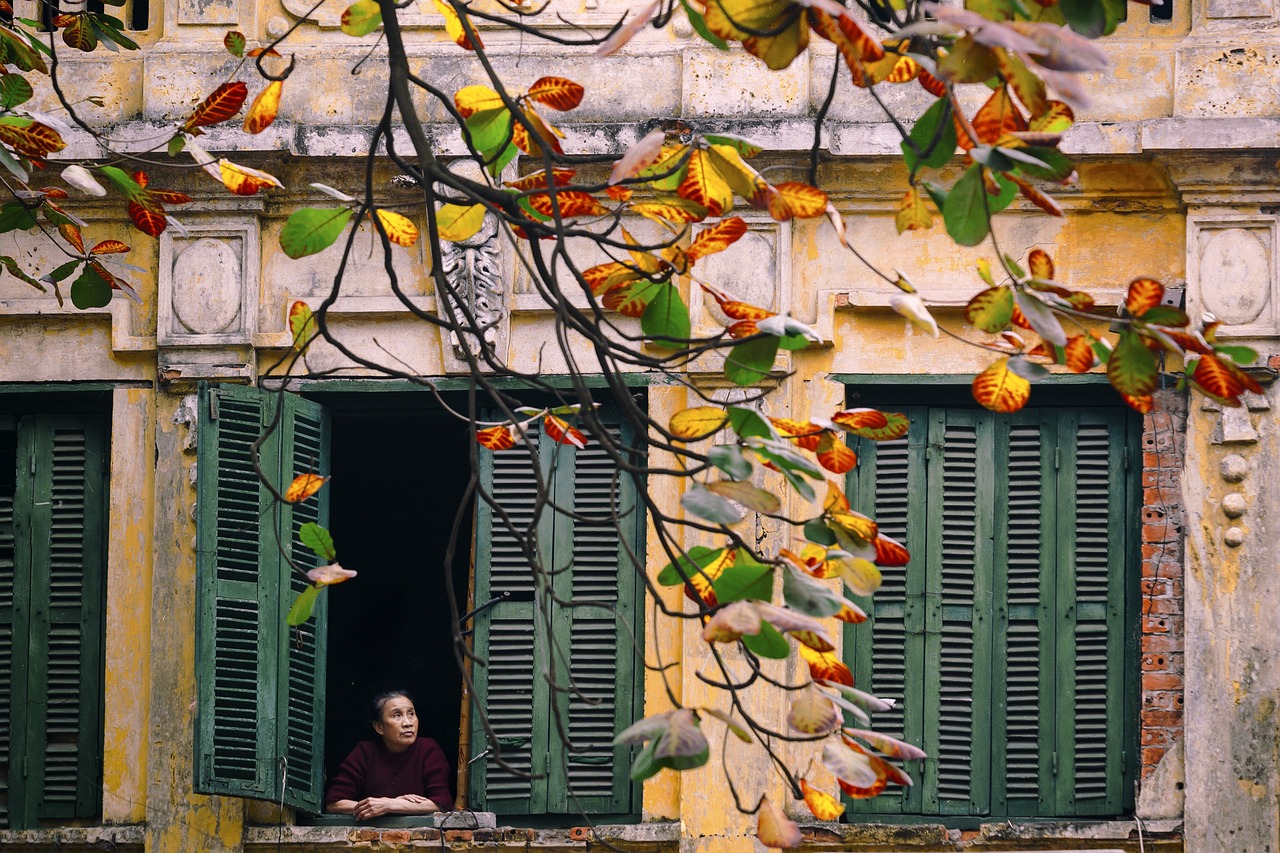
Hanoi winter is not tropical-winter. From December through February the mornings arrive genuinely chilly — some nights in the coldest stretch dip below 10 °C — and locals wrapped in scarves will tell you, with complete sincerity, that Hanoi cold feels colder than the thermometer says. The payoff is dry, crisp air, a moody grey-gold light that photographers love, and streets you can walk for hours without overheating. Pack layers you can shed by ten in the morning, and know that the Hoan Kiem Lake tai chi clubs still gather from about 5:30–6:00 whatever the temperature.
This is egg-coffee weather, by design. The drink was invented in 1946 by Nguyen Van Giang, a Metropole bartender whisking egg yolk with condensed milk and robusta because fresh milk was scarce, and his family still serves it at Cafe Giang on Nguyen Huu Huan street for about 35,000–40,000 VND a cup. A hot cup in a warm café with grey skies outside is the definitive Hanoi winter afternoon — our 에그 커피 가이드 has the full story and the best cafés.
From February into March the city often meets mua nồm, a stretch of humid, damp drizzle when moisture hangs in the air, floors turn slick and laundry dries slowly. It is not dramatic rain — more a grey, damp haze that can last days — and it passes. Quick-dry fabrics and a light shell make it a non-issue; museums, temples, long lunches and another egg coffee make it a pleasure.
Tet, the Lunar New Year, falls in late January or February — the exact dates shift every year, so check the calendar for your travel year. The city dresses up beautifully and travel peaks hard; our advice on booking around it is in the prices section below.

🌧️ Summer (May–September)
From May the summer engine starts: hot and humid, with peak days pushing 30–38 °C and the year’s heaviest rain falling between July and September. The saving grace of Hanoi’s summer rain is its shape — it tends to arrive as a dramatic afternoon downpour rather than an all-day soak: thunder, a proper dump of water, then clearing skies. Locals plan around it the way coastal towns plan around tides, and after a week in the city you will too.
The rhythm works. Streets wake early: markets trade in the cool of the morning, and the lakeside paths fill from around 5:30 to 6:00. Do the same — see the outdoors before 9:00, then follow the local lead and go indoors from roughly 13:00 to 15:00: museums, temples, a long lunch, our spa, a slow coffee. When the air eases toward evening the city visibly relaxes, and nights out run late — that is when our things-to-do guide earns its keep, splitting the city neatly into morning lists and after-dark ones. Our getting-around guide covers the days when a Grab beats walking through a downpour.

Summer suits travellers who do not mind heat and want the city at its greenest and least crowded; it is also when rates are friendliest. If heat drains you, choose the shoulder months instead. But if you can adopt the local rhythm — early starts, a shaded midday, late evenings — summer Hanoi is rewarding and never boring.
🍂 Autumn (September–November)
Ask a Hanoi local for the best season and you will get one word: autumn. September starts hot and showery — it is the hinge of the year, improving week by week — and by October the city settles into its most comfortable stretch: mild, drier, with a golden quality to the light that photographers plan whole trips around. November keeps the gift and adds the first cool nights of winter. In this air, the morning loop around Hoan Kiem Lake — tai chi clubs, coffee stalls, the lake doing its slow morning warm-up — is a pleasure rather than a feat.
Autumn is also when the city eats and celebrates best. Seasonal specialties return to menus across the Old Quarter, and the Mid-Autumn lantern festival typically lights up September or early October with lanterns strung across the lanes. Much of the food calendar turns over with the season, which is one more reason our street food guide is worth reading with your dates in hand.
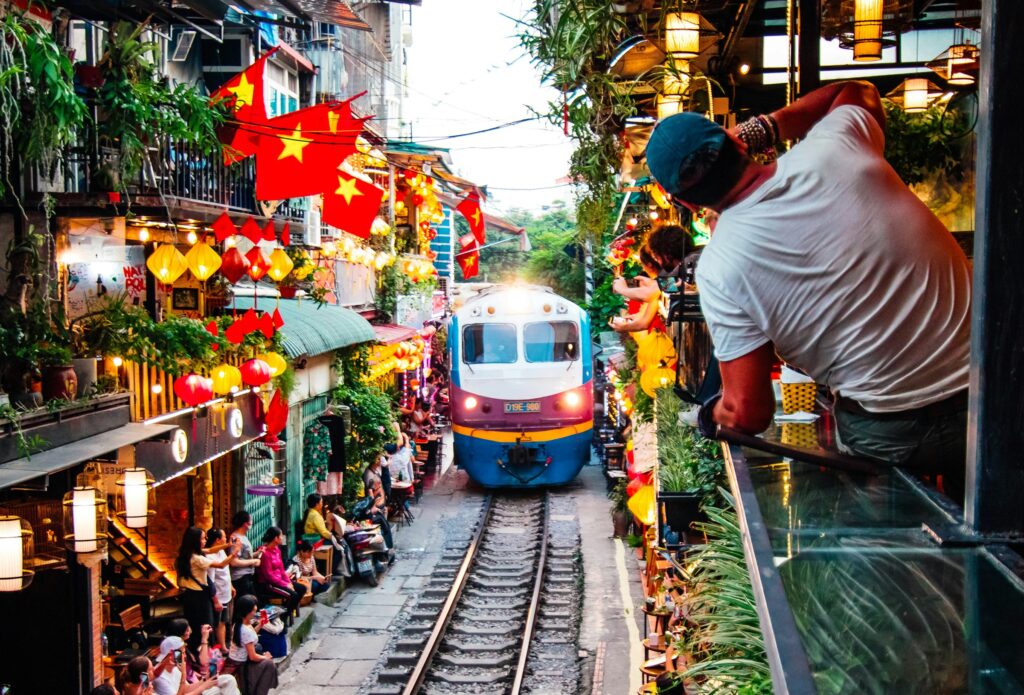
The honest cost of the best weather is company: October and November draw the biggest crowds, and hotel rooms and day tours fill faster than at any other time of year. If Train Street is on your list, our Train Street guide covers the café-only rules and the daily schedule — the cafés run all year, whatever the season.
🌸 Spring (March–April)
Spring runs March into April: warm days returning, the tail of the mua nồm drizzle clearing as the weeks pass, and the city turning green ahead of summer. April is the gentler of the two — by then the damp stretch has usually given way and the serious heat has not yet arrived, which is exactly why early April shares the sweet spot with autumn. Light jackets come off by mid-morning; plans made for outdoors rarely get rained off.
One catch worth planning for: Tet falls in late January or February, with exact dates changing every year, so check the lunar calendar for your travel year. If your dates align with the run-up to Tet you will meet the city’s festive build-up — decorations going up, markets filling, the atmosphere families travel across the country for. If they fall just after, expect a calmer city shaking itself back to life. Either way, spring evenings suit the walking street and the night market beautifully; our night market and nightlife guide covers the Friday-to-Sunday route.
And if this guide is part of trip you are currently building, our complete guide to Rey Hotel Hanoi covers the rooms, the dining and the neighbourhood we would walk you through first — or simply write to us through our site and we will help you shape the dates.
🧳 What to Pack, Season by Season
Packing for Hanoi is really packing for two cities a few months apart. The quick version by season:
🧥 For winter (December–February)
Layers are the whole game: t-shirts for midday, a warm sweater and a proper jacket for mornings and nights, something for the below-10 °C evenings, and comfortable closed shoes. Scarves are easy to buy here at fair prices if you under-pack — our guests’ souvenir photos often feature them.
☂️ For summer (May–September)
Breathable clothes, a compact umbrella or light rain shell, quick-dry shoes, a hat, sunscreen and a refillable water bottle. Accept in advance that you will be caught in one downpour, plan the 13:00–15:00 indoor break accordingly, and the weather becomes part of the story rather than the villain of it.
🌸 For the sweet spots (October–November and March–April)
Light layers for warm days plus one warmer layer for evenings, and comfortable walking shoes above all. Bring modest clothing too — shoulders and knees covered — for the temples and for the Ho Chi Minh Mausoleum, which enforces its dress code strictly. A light rain shell earns its place in both months.
👟 Any time of year
Broken-in walking shoes are the single most important item in the suitcase — the Old Quarter is explored on foot, one lane at a time. Add a day bag that closes properly, a portable charger for map-heavy days, and leave real space for what you will buy: everything from silk to egg-coffee mugs is available here.
💰 Prices and Crowds by Season
The weather writes the price calendar. The October–November and March–April sweet spots are high season: rooms fill faster, the most popular room categories go first, and day-trip buses run full, so booking ahead in those windows is genuinely worth it. The hot, showery summer months and the damp late-winter drizzle are the quiet stretch — availability is easy and rates often soften, which is why we tell flexible travellers to consider May or late August with their eyes open.
Then there is Tet. Because the Lunar New Year falls in late January or February — dates change every year, so check yours — the entire country travels at once: trains, flights and buses sell out days in advance, family-run restaurants close for a few days, and the city is both at its most beautiful and at its most logistically demanding. If Tet is on your itinerary, book accommodation and transport as early as you possibly can.
⚠️ Tet warning from our desk: in the week around Tet, do not leave transport to the last minute. Book trains, buses and rooms early, keep some cash aside, and check which of your must-eat places close for the holiday. The upside — lanterns, decorations and a city dressed for its biggest celebration — is worth every bit of the planning.

Much of Hanoi ignores the calendar anyway. The Weekend Night Market runs Friday to Sunday year-round; egg coffee tastes the same in February as in October; and day trips such as the Perfume Pagoda and Ninh Binh run in every season — our Hanoi tours guide compares the main options. For flights, visas and the airport transfer itself, start with our how to get to Hanoi guide.
💡 Local tip: borrow our staff’s daily rhythm in any season — outdoors early (Hoan Kiem Lake is loveliest before 8:00), indoors from 13:00 to 15:00 in the hot months, and back out after about 17:00 when the city relaxes. Plan each day around that shape and Hanoi feels easy rather than exhausting, whatever the forecast says.
❓ Frequently Asked Questions
하노이를 방문하기 가장 좋은 달은 무엇입니까
10월과 11월은 온화하고 건조하며 황금빛을 띠는 고전적인 대답이며, 3월과 4월은 여름 더위가 시작되기 바로 직전입니다. 두 창 모두 가장 편안한 관광 날씨와 사진을 찍을 수 있는 최고의 도시를 결합합니다. 이것이 바로 이 달에 호텔 객실과 당일 투어가 더 빨리 채워지는 이유입니다.
무아놈(Mua Nồm)이 무엇인가요?
무아놈(Mua nồm)은 2월과 3월경 하노이에 정착하는 습하고 습한 날씨로, 공기 중 습기로 인해 바닥이 미끄러워지고 세탁물이 느리게 건조됩니다. 극적인 비보다 더 회색의 이슬비가 내리며 몇 주 안에 그칩니다. 속건성 옷과 가벼운 비옷은 문제가 되기보다는 여행의 사소한 세부 사항으로 만듭니다.
Tet은 언제이며 여행에 영향을 줍니까?
음력 설인 Tet은 1월 말이나 2월에 해당하며 정확한 날짜는 매년 바뀌므로 음력 달력을 확인하여 여행 날짜를 확인하세요. 분위기는 좋지만 물류에 있어서는 힘든 한 주입니다. 운송이 매진되고 가족이 운영하는 많은 기업이 며칠 동안 문을 닫습니다. 가능한 한 빨리 숙소와 교통수단을 예약하세요.
하노이는 여름에 너무 덥나요?
여름철은 습도에 맞춰 정기적으로 30~38°C에 도달하며, 7월부터 9월까지는 일년 중 가장 많은 비가 내립니다. 그런 날씨의 정오 관광은 정말 힘든 일입니다. 대신 현지 리듬을 따르세요. 이른 야외 활동, 13:00~15:00 경 실내 휴식, 저녁에는 거리로 나가기 등 여름은 매우 관리하기 쉽습니다.
하노이 호텔 가격은 언제 가장 낮나요?
요금은 수요가 감소하는 가장 덥고 습한 기간(여름 몬순 기간 및 늦겨울의 습한 이슬비)에 가장 우호적인 경향이 있습니다. 10~11월과 3~4월의 최적 지점은 가장 수요가 많고 가장 빨리 채워집니다. 여행할 때마다 호텔에 직접 현재 요금을 확인하여 정확한 최신 요금을 확인하세요.

 English
 Korean
 Chinese (China)
 Japanese
 Vietnamese
 French
 German
 Spanish
 Italian
 Russian
 Chinese (Taiwan)
 Chinese (Hong Kong)
 Thai
 Arabic